Emergency callouts 0415 397 334
Skip to main content
All Posts By

admin

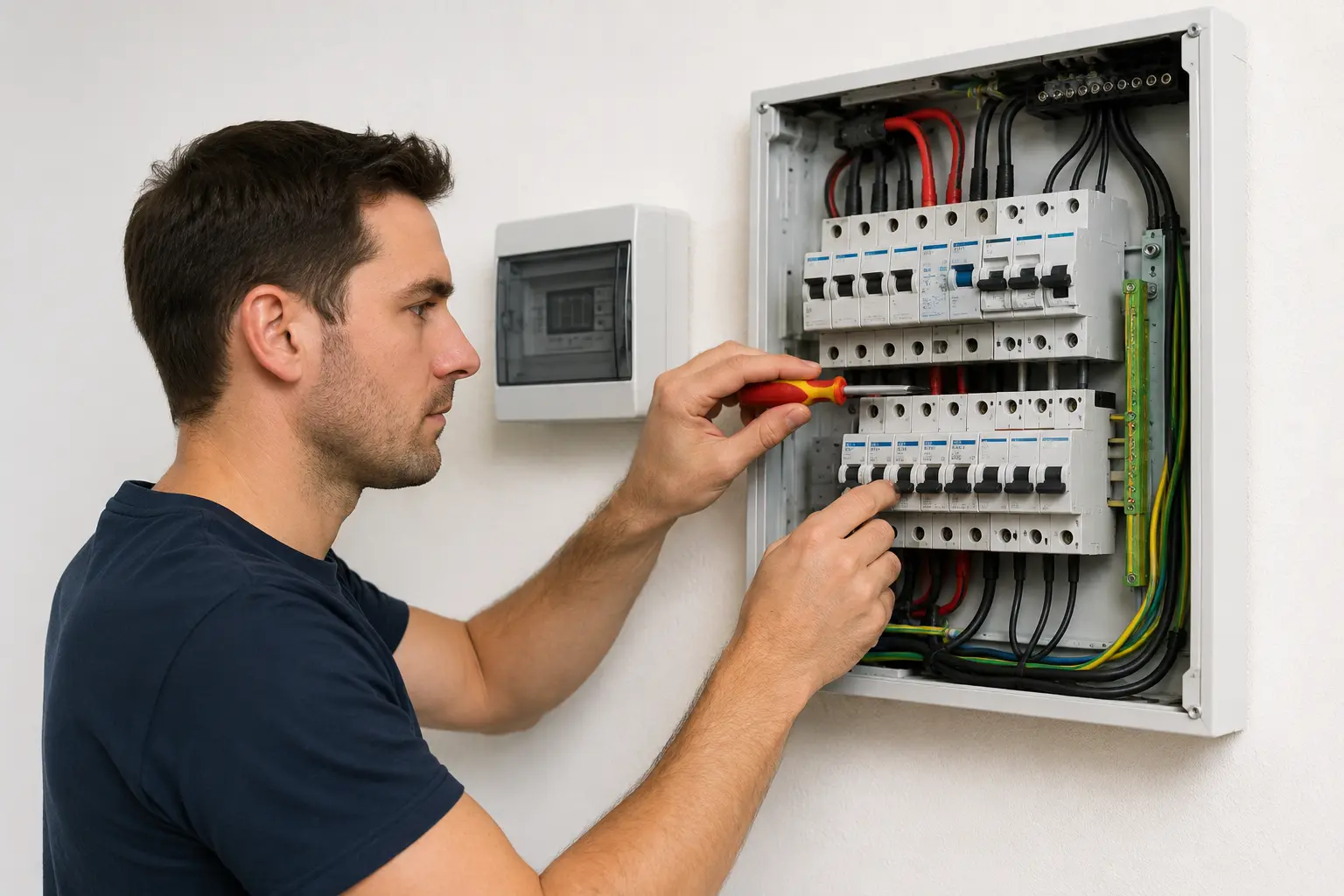
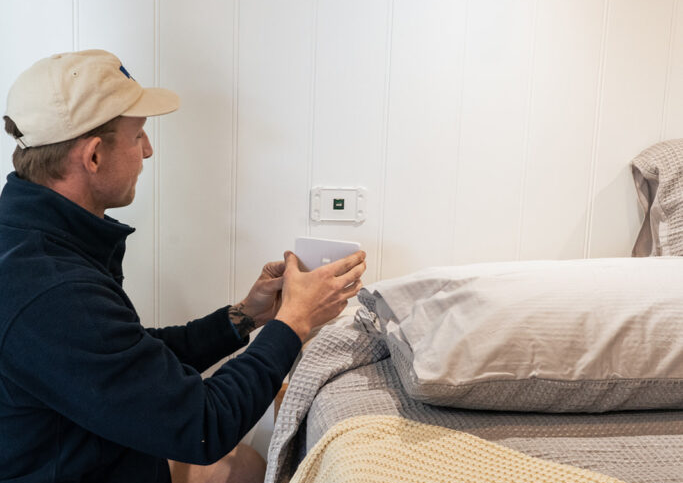
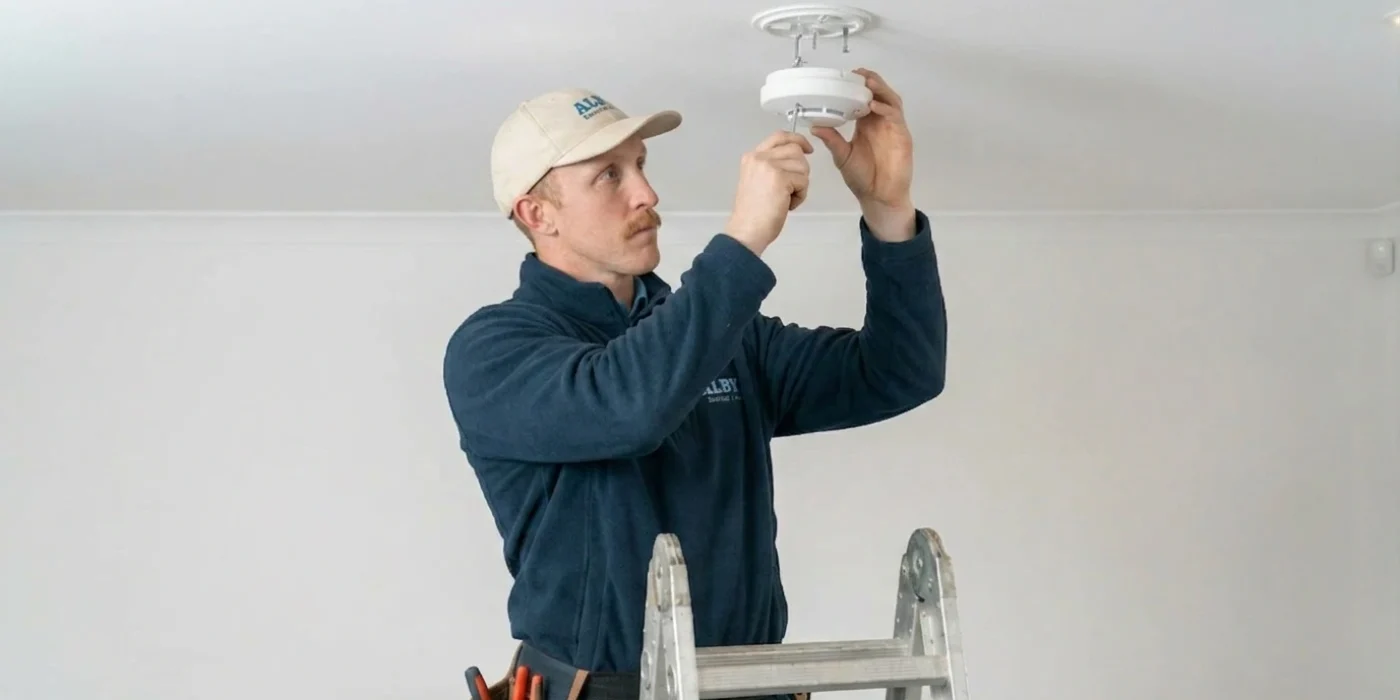
Technician from Alby Electrical & Air upgrading a Perth home's switchboard for safety.

When to Upgrade Your Electrical Switchboard

By UncategorizedNo Comments
Technician from Alby Electrical & Air upgrading a Perth home's switchboard for safety.

When to Upgrade Your Electrical Switchboard: 10 Signs You Shouldn't Ignore

Your electrical switchboard quietly powers every room in your home, distributing electricity to your lights, appliances, air conditioning, and power outlets. While it’s one of the most important parts of your electrical system, it’s also one of the most overlooked. Many homeowners don’t realise there’s a problem until they experience frequent power outages, faulty appliances, or an electrical emergency.

An outdated or overloaded switchboard can do more than inconvenience your household; it can increase the risk of electric shock, electrical fires, and damage to expensive appliances. Knowing the warning signs can help you address issues early and keep your home safe.

At Alby Electrical & Air, we provide professional switchboard inspections and upgrades for homeowners across Perth. If you’ve noticed any of the following signs, it may be time to have your switchboard assessed by a licensed electrician.

Why Your Switchboard Matters

Your switchboard acts as the central hub of your home’s electrical system. It safely distributes electricity to each circuit while protecting your property from overloads, short circuits, and electrical faults.

Modern households use significantly more electricity than homes built decades ago. Air conditioners, induction cooktops, electric vehicle chargers, solar systems, home offices, and entertainment equipment all increase the demand on your electrical system. If your switchboard hasn’t kept pace, it may no longer provide the level of protection your home needs.

1. Your Home Still Has Ceramic Fuses

One of the clearest indicators that your switchboard may need upgrading is the presence of ceramic fuses. Older fuse boards require fuses to be manually replaced when they blow, unlike modern circuit breakers that can simply be reset. More importantly, ceramic fuses don’t offer the same level of protection as today’s electrical safety devices.

If your home still has ceramic fuses, arranging a professional switchboard inspection is a smart first step.

2. Circuit Breakers Trip Frequently

If you’re constantly resetting your circuit breakers, your electrical system could be overloaded.

Frequent tripping often means your switchboard is struggling to cope with your household’s electricity usage. While the circuit breaker is doing its job by preventing dangerous overloads, repeated trips shouldn’t be ignored.

A licensed electrician can determine whether additional circuits or a switchboard upgrade are needed.

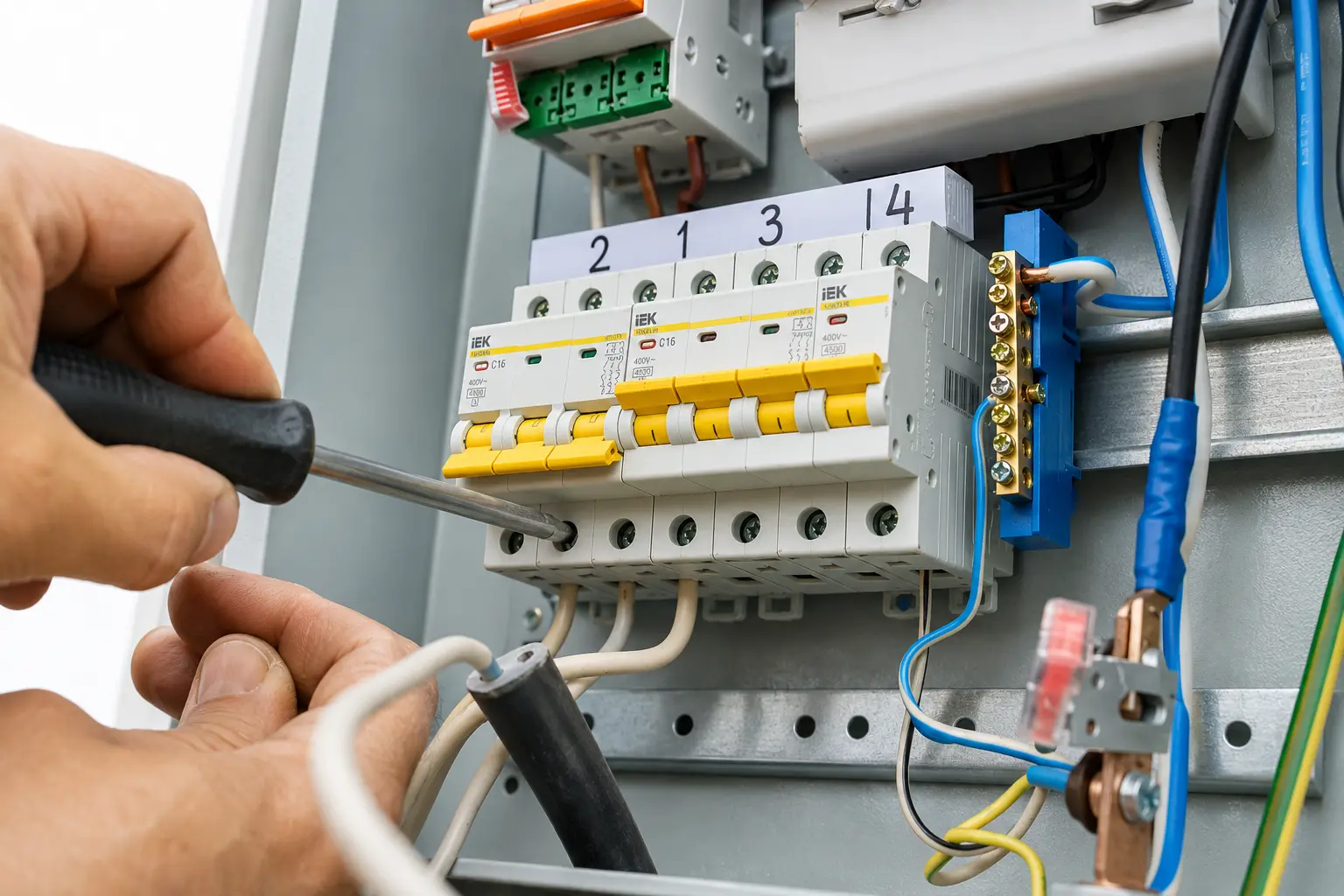
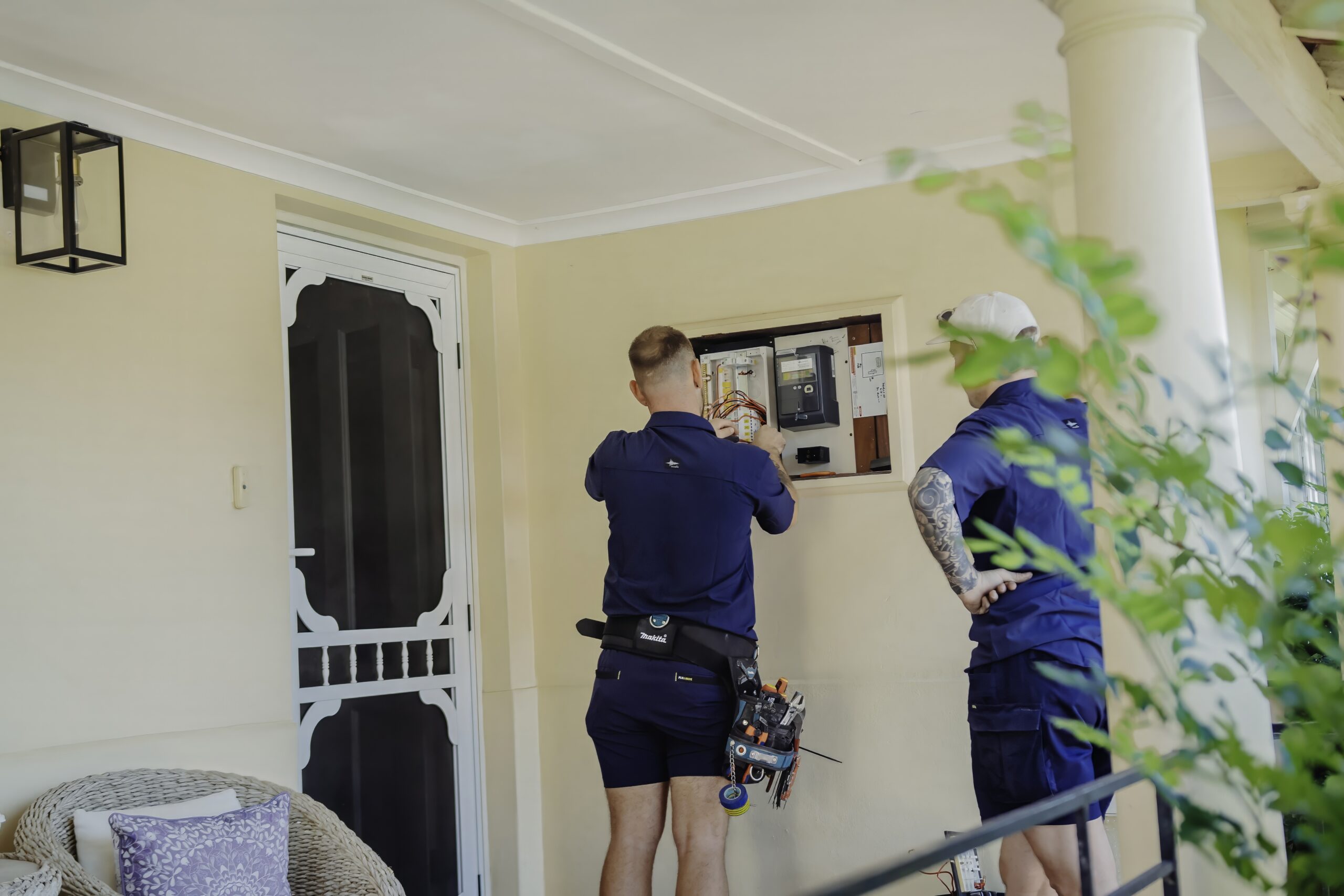
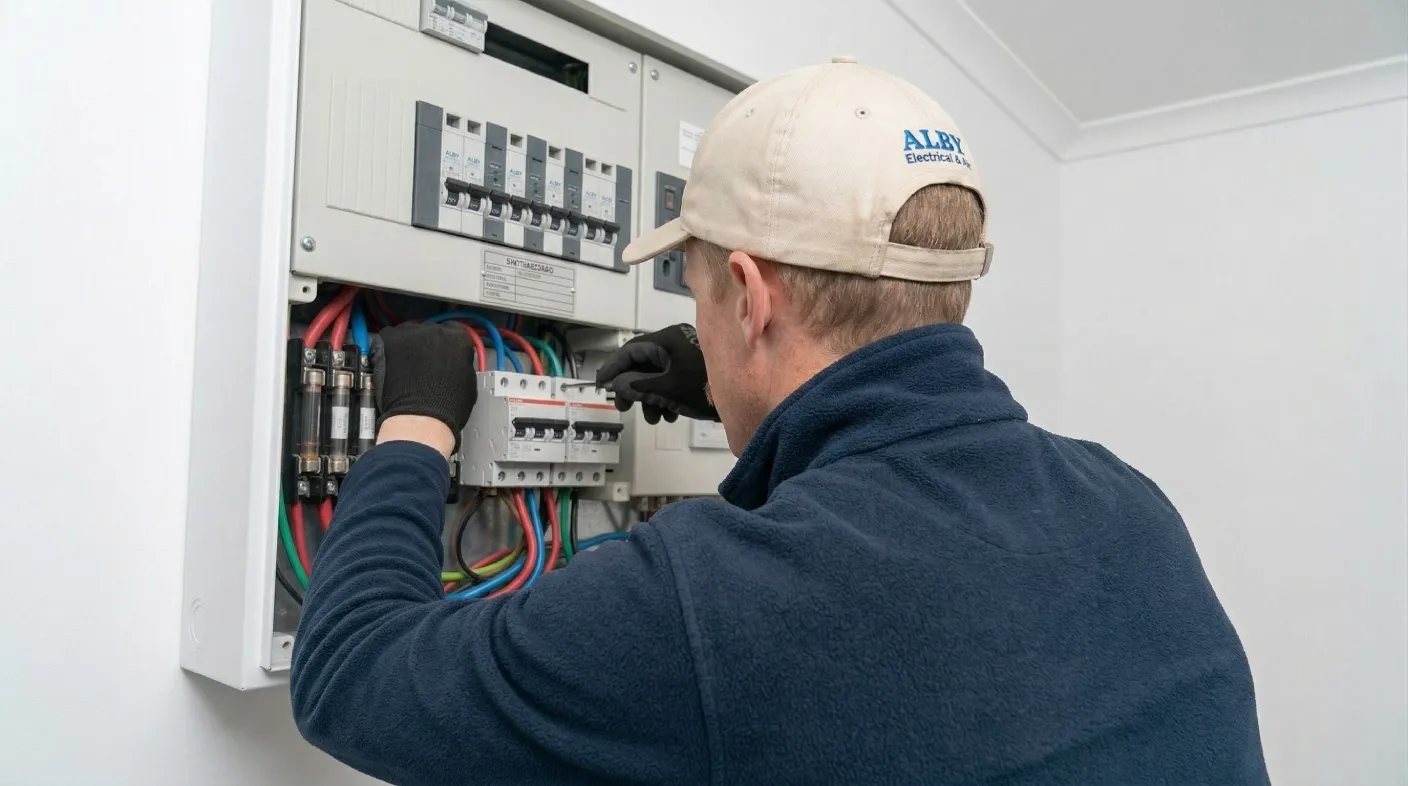
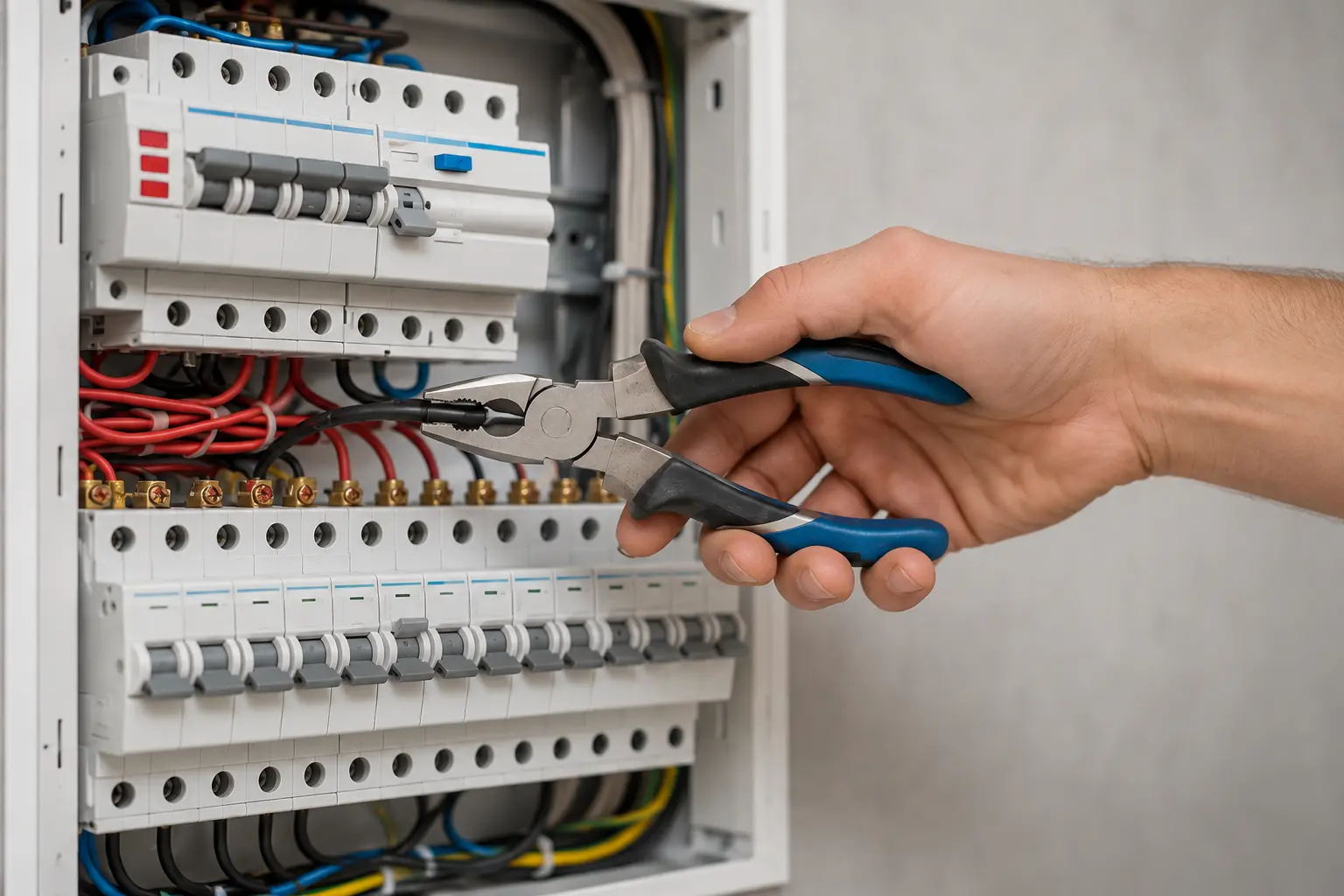
Close-up of a switchboard showcasing wiring involved in a switchboard upgrade for electrical services in Perth.

3. Flickering or Dimming Lights

Lights that flicker or dim regularly can have several causes, but if it happens throughout the home, especially when large appliances switch on, it may indicate your electrical system is under strain.

An outdated switchboard may not be distributing power efficiently, particularly if your home’s electrical demands have increased over time.

4. You're Renovating Your Home

Planning a kitchen renovation, home extension, new laundry, or outdoor entertaining area?

Renovations often involve installing additional lighting, power outlets, ovens, air conditioning, or other electrical appliances. These upgrades frequently require new electrical circuits, which your existing switchboard may not be equipped to handle.

Having your switchboard inspected before renovations begin can help avoid delays later in the project.

5. You're Installing Air Conditioning

Modern air conditioning systems, particularly larger reverse-cycle units, require dedicated electrical circuits.

If your switchboard lacks sufficient capacity or doesn’t meet current standards, an upgrade may be necessary before installation can proceed safely.

Your electrician can assess your existing electrical system as part of the installation process.

6. You're Installing Solar Panels or an EV Charger

Solar power systems and electric vehicle chargers place additional demand on your home’s electrical infrastructure.

Many older switchboards require upgrading before these systems can be installed safely and in compliance with Australian Standards.

Future-proofing your home with a modern switchboard makes it easier to accommodate new technologies as your household’s needs evolve.
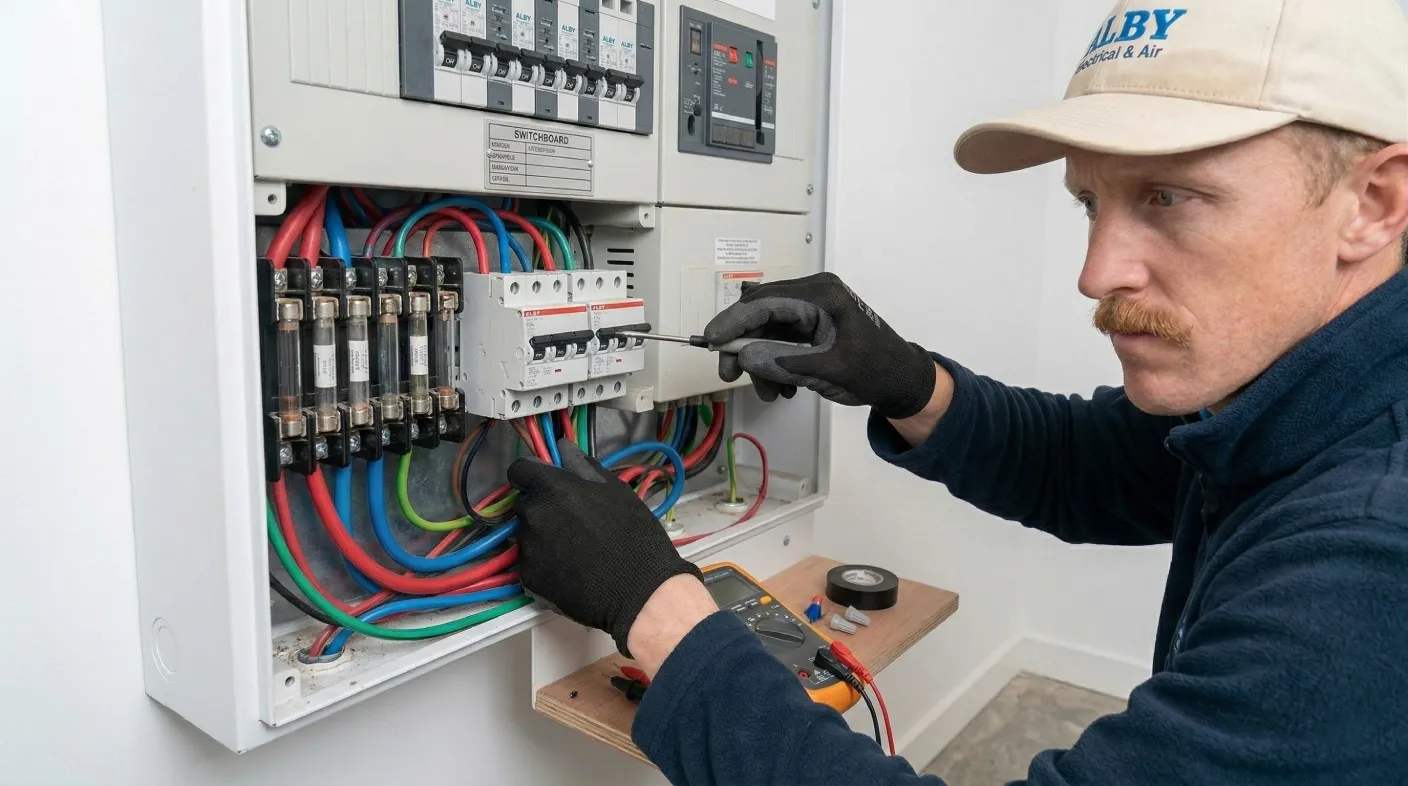
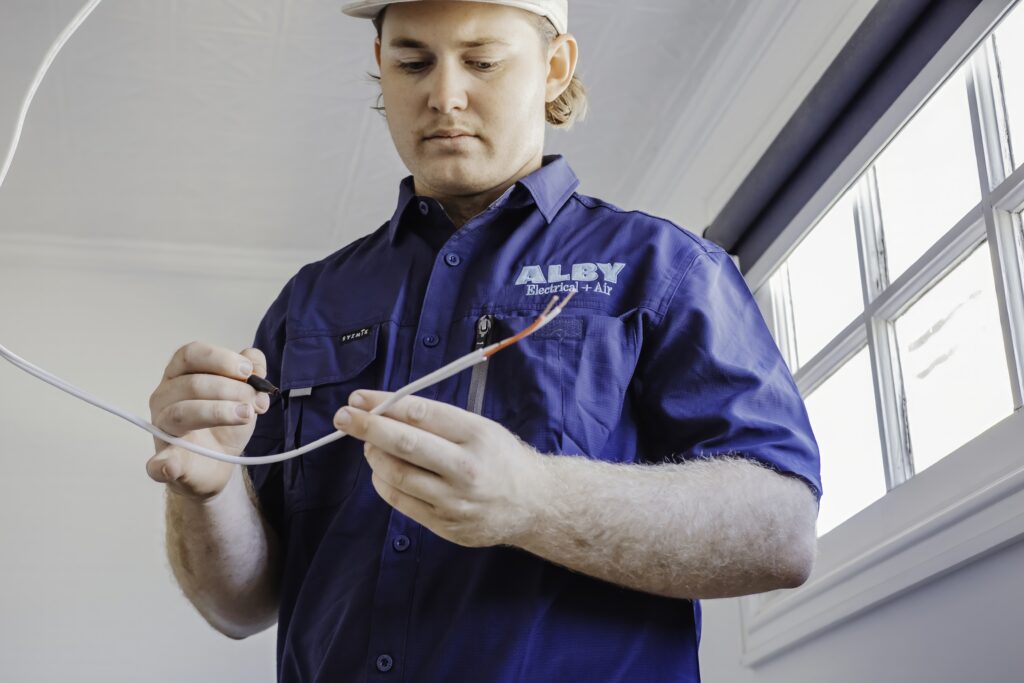
Electrician servicing a switchboard, ensuring safety and efficiency for Alby Electrical & Air in Perth.

7. You Notice Burning Smells or Scorch Marks

A burning smell near your switchboard should never be ignored.

Likewise, scorch marks, melted plastic, discoloured wiring, or excessive heat around the switchboard may indicate overheating or damaged electrical components.

These symptoms require immediate attention from a licensed electrician, as they could indicate a serious fire risk.

8. Buzzing or Crackling Sounds

Your switchboard should operate quietly. Buzzing, humming, crackling, or popping noises can indicate loose electrical connections, damaged breakers, or arcing electricity inside the switchboard.

Electrical arcing generates significant heat and should be investigated as soon as possible to avoid further damage or safety risks.

9. You Don't Have Safety Switches (RCDs)

Residual Current Devices (RCDs), commonly known as safety switches, are designed to disconnect electricity almost instantly if they detect an electrical fault.

Many older switchboards either don’t have safety switches or only provide limited protection. Installing modern RCD protection significantly improves household safety by helping reduce the risk of electric shock and electrical fires.

If you’re unsure whether your switchboard includes safety switches, a licensed electrician can inspect your system.

10. Your Switchboard Is More Than 20 to 30 Years Old

Even if your electrical system appears to be working normally, age alone can justify an inspection.

Electrical standards have changed significantly over the past few decades, and older switchboards weren’t designed to support today’s appliances or safety requirements.

If your switchboard is more than 20 to 30 years old, having it professionally assessed can help identify hidden issues before they become expensive repairs or safety concerns.

What Happens During a Switchboard Upgrade?

If your electrician recommends an upgrade, the process is generally straightforward.

A typical switchboard upgrade may include:

Most residential switchboard upgrades can be completed within a day, although larger properties or additional electrical work may require more time.

Why You Should Never Ignore Switchboard Problems

Electrical faults often develop gradually before becoming serious.

Ignoring warning signs can increase the risk of:

Addressing potential problems early is almost always simpler, safer, and more cost-effective than waiting for a complete failure.

Why Professional Installation Matters

Switchboard upgrades should always be completed by a licensed electrician.

Electrical switchboards contain live components that require specialist knowledge and strict safety procedures. DIY electrical work is illegal in Australia and can place both people and property at serious risk.

Professional installation ensures:

Choosing an experienced electrician also gives you confidence that your upgraded switchboard is designed to support your home’s current and future electrical needs.

Keep Your Home Safe with Alby Electrical & Air

Your switchboard plays a vital role in protecting your family, home, and valuable appliances. If you’ve noticed any of these warning signs, or you’re planning renovations, installing air conditioning, solar panels, or an EV charger, now is the ideal time to have your electrical system assessed.

At Alby Electrical & Air, our licensed electricians provide professional switchboard inspections and upgrades throughout Perth. We’ll assess your existing system, explain your options, and recommend practical solutions that improve safety, reliability, and compliance.

If you’re unsure whether your switchboard needs upgrading, our friendly team is here to provide honest advice and expert workmanship to help keep your home powered safely.
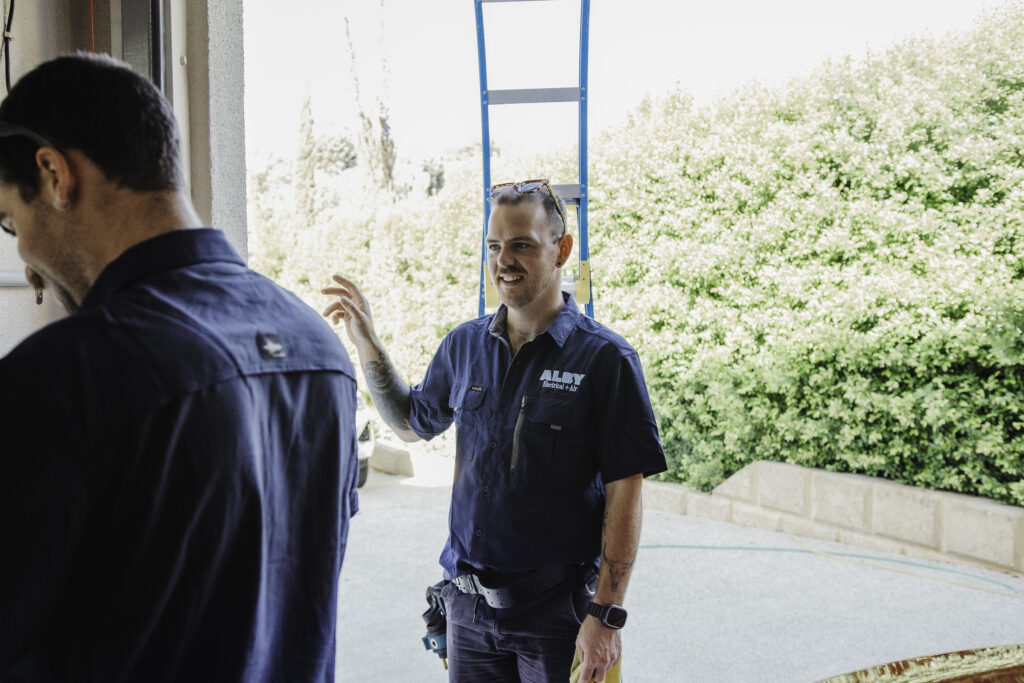
Alby Electrical & Air team ready to provide professional air-conditioning installation services in Perth.

Frequently Asked Questions

Common signs include ceramic fuses, frequent circuit breaker trips, flickering lights, burning smells, buzzing sounds, a lack of safety switches, or planning to install high-powered appliances like air conditioners, solar panels, or EV chargers. A licensed electrician can inspect your switchboard and determine if an upgrade is needed.

An older switchboard isn’t always unsafe, but outdated components may not provide the same level of protection as modern systems. Older switchboards can be more susceptible to overloads, electrical faults, and insufficient protection against electric shock, making a professional inspection worthwhile.

Most residential switchboard upgrades can be completed within a single day. The exact timeframe depends on the size of the property, the condition of the existing electrical system, and whether additional electrical work is required.
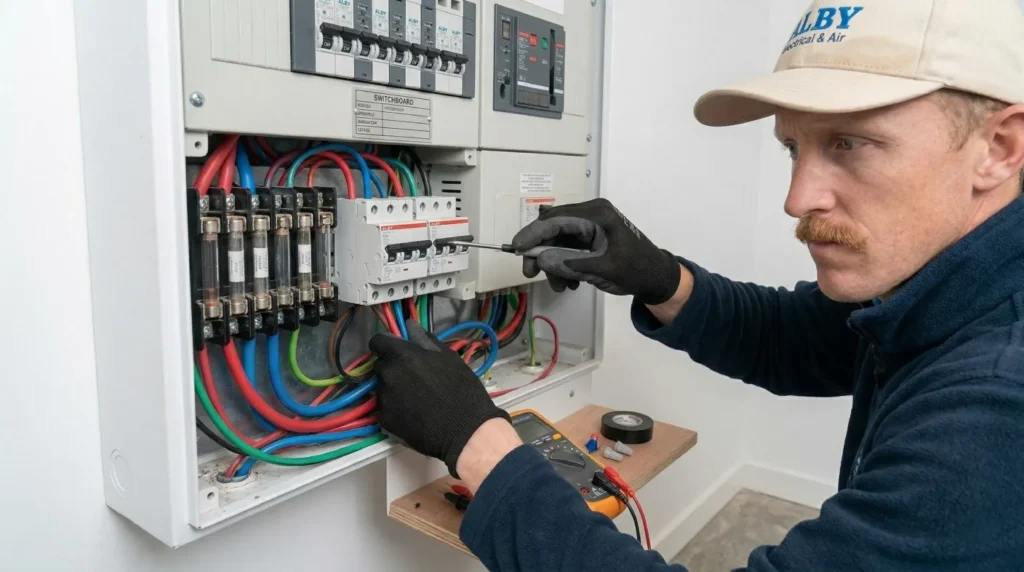
Electrician servicing a switchboard, ensuring safety and efficiency for Alby Electrical & Air in Perth.

What Is a Switchboard Upgrade

By UncategorizedNo Comments
Electrician servicing a switchboard, ensuring safety and efficiency for Alby Electrical & Air in Perth.

What Is a Switchboard Upgrade? Everything Australian Homeowners Need to Know

Your home’s switchboard is the heart of its electrical system. Every light, appliance, power outlet, and circuit depends on it to safely distribute electricity throughout your property. While it’s often hidden away in a garage or utility area, an outdated switchboard can present serious safety risks and may struggle to meet the demands of modern living.

If you’ve heard the term “switchboard upgrade” but aren’t sure what it involves, you’re not alone. Many Australian homeowners only think about their switchboard when something goes wrong or during a renovation.

At Alby Electrical & Air, we help homeowners across Perth upgrade outdated switchboards to improve safety, support modern appliances, and ensure compliance. Here’s everything you need to know about switchboard upgrades and when it’s time to consider one.

What Is a Switchboard?

A switchboard is the central point where electricity enters your home and is distributed to different electrical circuits.

Inside the switchboard, you’ll typically find:

If there’s an electrical issue, such as a short circuit or overloaded circuit, the switchboard is designed to disconnect power quickly to reduce the risk of electric shock, fire, or damage to your appliances.

What Is a Switchboard Upgrade?

A switchboard upgrade involves replacing or modernising an older electrical switchboard with a safer, more reliable system that meets current Australian electrical standards.

Depending on the condition of your existing switchboard, an upgrade may include:

The goal is to create an electrical system that is safer, more efficient, and capable of handling today’s electricity demands.

Why Are Switchboard Upgrades Important?

Many older homes across Perth were built before today’s high-powered appliances became common. Air conditioners, induction cooktops, electric vehicle chargers, home offices, entertainment systems, and solar power systems all place greater demand on your electrical system.

An outdated switchboard may not provide adequate protection for your family or your property. Upgrading your switchboard offers several important benefits.

Technician from Alby Electrical & Air upgrading a Perth home's switchboard for safety.

Improved Electrical Safety

Modern switchboards include safety switches that rapidly disconnect electricity if they detect a fault. This significantly reduces the risk of electric shock and electrical fires.

Safety switches are now considered one of the most important electrical safety devices in Australian homes.

Better Protection for Appliances

Power surges, overloaded circuits, and electrical faults can damage expensive appliances and electronics.

Modern switchboards provide improved protection for devices such as:

Increased Capacity

Today’s households use far more electricity than homes built 30 or 40 years ago. A switchboard upgrade allows your electrical system to support additional circuits for safely:

Improved Reliability

Older switchboards can become unreliable over time, resulting in nuisance tripping, overheating, or inconsistent power supply.

A modern switchboard helps deliver more stable electrical performance throughout your home.

Signs You May Need a Switchboard Upgrade

Signs You May Need a Switchboard Upgrade

Not every switchboard requires immediate replacement, but several warning signs indicate it may be time to have yours inspected.

You Still Have Ceramic Fuses

Traditional ceramic fuses are common in older homes. Unlike modern circuit breakers, they need to be physically replaced after blowing and provide significantly less protection.

If your home still uses ceramic fuses, it’s worth arranging a professional electrical inspection.

Your Circuit Breakers Trip Frequently

If your power regularly trips when using multiple appliances, your switchboard may no longer have sufficient capacity for your home’s electrical load. Frequent tripping should never be ignored.

Lights Flicker

Occasional flickering may simply indicate a faulty light globe. However, repeated flickering throughout the home could indicate electrical issues within the switchboard or wiring that require investigation.

You're Renovating

Planning a kitchen renovation, home extension, or new air conditioning installation? Additional circuits are often required to safely power new appliances. A switchboard upgrade may be necessary before the new electrical work can proceed.

You're Installing Solar Panels

Most modern solar installations require your switchboard to meet current standards. If your existing switchboard is outdated, your installer may recommend upgrading it before connecting the solar system.

You're Installing an EV Charger

Electric vehicle chargers draw significantly more power than standard household appliances. Many homes require a switchboard upgrade before installing a dedicated EV charging circuit.

Burning Smells or Heat

If your switchboard feels unusually warm or you notice burning smells, buzzing sounds, scorch marks, or discoloured wiring, contact a licensed electrician immediately.

These symptoms may indicate a serious electrical fault requiring urgent attention. Even if the signs seem minor, it’s worth having your switchboard checked by the experienced team at Alby Electrical & Air to identify potential issues before they become costly repairs.

What Happens During a Switchboard Upgrade?

Every property is different, but a typical switchboard upgrade generally follows these steps.

Electrical Inspection

A licensed electrician inspects your existing switchboard, wiring, circuits, and overall electrical system.

Recommendations

You’ll receive advice on any upgrades required to improve safety, capacity, and compliance.

Safe Isolation

Power is safely disconnected while work is completed.

Installation

The electrician installs the new switchboard, circuit breakers, safety switches, and any additional protective devices.

Testing

Every circuit is thoroughly tested to ensure safe operation and compliance with Australian Standards.

Certification

Upon completion, you’ll receive certification confirming the electrical work has been completed safely and correctly.

How Long Does a Switchboard Upgrade Take

How Long Does a Switchboard Upgrade Take?

For most residential properties, a standard switchboard upgrade can usually be completed within one day.

The exact timeframe depends on factors such as:

Your electrician can provide a more accurate estimate after inspecting your home.

Is a Switchboard Upgrade Worth It?

Although homeowners often focus on visible improvements such as kitchens or bathrooms, a switchboard upgrade is one of the most valuable investments you can make in your property’s safety.

A modern switchboard helps:

It’s an upgrade that delivers long-term peace of mind while protecting the electrical systems you rely on every day.

Why Professional Installation Matters

Switchboard upgrades should only ever be carried out by a licensed electrician.

Electrical switchboards contain live electrical components that can be extremely dangerous if handled incorrectly.

Professional installation ensures:

Attempting DIY electrical work is illegal in Australia and can place both people and property at serious risk.

Trust Alby Electrical & Air for Switchboard Upgrades in Perth

Trust Alby Electrical & Air for Switchboard Upgrades in Perth

Whether your home has an ageing switchboard, you’re planning renovations, installing air conditioning, adding solar panels, or preparing for an EV charger, having a safe and compliant electrical system is essential.

At Alby Electrical & Air, we provide professional switchboard inspections and upgrades for homeowners throughout Perth. Our licensed electricians assess your current electrical system, recommend practical solutions, and complete every upgrade with safety, quality, and compliance at the forefront.

If you’re unsure whether your switchboard is keeping up with your home’s electrical demands, our team is here to help you make an informed decision and ensure your electrical system is ready for the future.

Frequently Asked Questions

Signs include ceramic fuses, frequent circuit breaker trips, flickering lights, burning smells, or planning to install high-powered appliances such as air conditioners, solar panels, or EV chargers. A licensed electrician can inspect your switchboard and recommend whether an upgrade is required.

In many cases, yes. Solar systems and EV chargers increase the electrical load on your home, and older switchboards may not meet current government guidelines or provide adequate protection. An electrician can determine whether an upgrade is needed before installation.

The cost varies depending on the age of your existing switchboard, the number of circuits, and any additional electrical work required. The best way to receive an accurate price is to arrange an on-site inspection with a licensed electrician.

ignatius bitvalley technician repairing air conditioner inside  33613264 2063 465e 80c9 78ebd82b8718

What is Reverse Cycle Air Conditioning Explained

By UncategorizedNo Comments
ignatius bitvalley technician repairing air conditioner inside  33613264 2063 465e 80c9 78ebd82b8718

What Is Reverse Cycle Air Conditioning and How Does It Work?

If you have spent a Perth summer chasing shade and a Perth winter reaching for an extra jumper, you already know our weather likes to keep you guessing. Reverse cycle air conditioning is the system that handles both ends of that swing from a single unit. Instead of running a separate heater in winter and a cooler in summer, one reverse cycle system keeps your home comfortable all year.

Here is a plain explanation of how it works, the system types available, and what to weigh up before you install one.

How reverse cycle air conditioning works

The clever part is something called a heat pump. Rather than burning fuel to make heat, a reverse cycle system simply moves heat from one place to another.

In cooling mode, it pulls warmth out of the air inside your home and pushes it outside, leaving the rooms cooler. In heating mode, a reversing valve flips the process so the system draws warmth from the outdoor air, even on a cold morning, and brings it indoors. The same refrigerant and the same components do both jobs, which is why one unit can cool you in January and warm you in July.

Because it shifts heat rather than generating it, this approach is one of the more energy-efficient ways to keep a home comfortable.

Split system or ducted: which suits your home

Reverse cycle systems come in two main forms, and the right choice depends on your home and how many rooms you want to control.

A split system is usually the simplest and most affordable place to start. Ducted suits larger homes or anyone wanting whole-house comfort with a tidy, discreet finish. If you are weighing up options for your place, our team can talk you through air conditioning installation in Perth and what fits your layout and budget.

Why reverse cycle air conditioning suits the Perth climate

Perth gives us long, hot summers and the odd genuinely chilly winter night. A reverse cycle system is built for exactly that mix. You set a temperature, and the unit works to reach it and hold it, whether that means cooling on a scorching afternoon or warming the lounge before sunrise.

Most systems also filter the air as they run, which helps with dust and stuffiness around the home. Many models add useful modes as well, such as a dry setting for humid days, a sleep mode that eases the temperature back overnight, and an auto mode that picks heating or cooling for you.

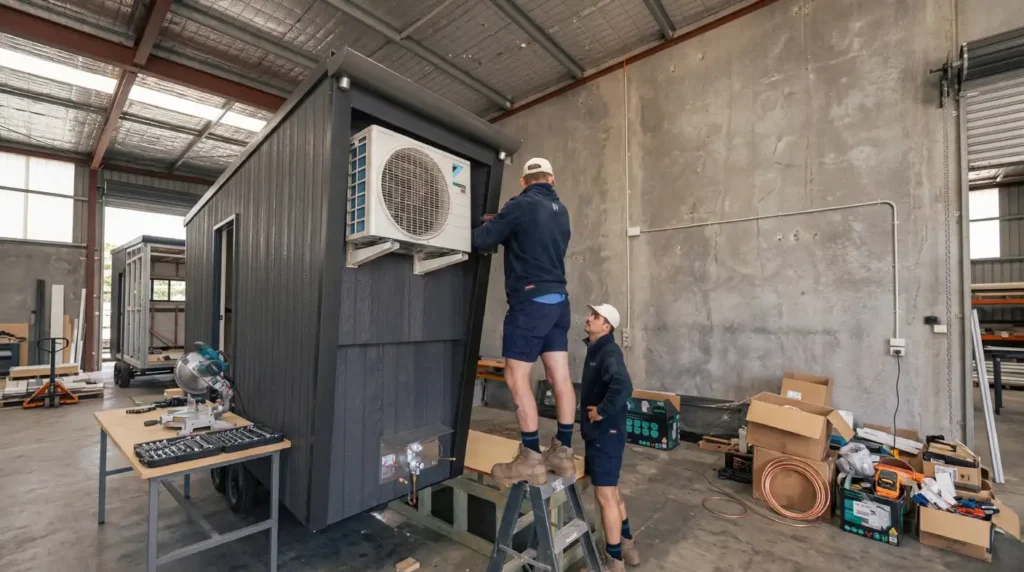
Technicians installing an air conditioning system for optimal performance in Perth’s hot summers.

Energy efficiency and running costs

Energy use is where reverse cycle really earns its keep. Every unit sold in Australia carries an energy rating label, and the star rating gives you a quick read on efficiency. More stars mean lower running costs over the life of the system.

A higher-rated model may cost a little more upfront, but it tends to pay you back through smaller power bills. Sizing matters here, too. A unit that is too small will strain to keep up, while one that is too large wastes energy. Getting the sizing right for your room is one of the biggest factors in how cheaply a system runs day to day.

When to call a licensed electrician

Choosing a system is the easy part. Installing one safely is a job for a qualified professional. Reverse cycle air conditioning ties into your home’s wiring and switchboard, so it needs to be fitted by a licensed electrician who can make sure everything meets standard and runs safely.

Booking a proper install also protects your warranty and keeps the system performing the way it should for years to come.

If you are ready to enjoy comfortable temperatures all year, the team at Alby Electrical & Air can help you choose and install the right reverse cycle system for your home. Get in touch with us today for an honest quote and friendly advice from your local Perth electricians.

How Often Do Smoke Alarms Need Replacing?

Why Does My Smoke Detector Keep Beeping? Common Causes and Easy Fixes

By UncategorizedNo Comments
How Often Should Smoke Alarms Be Tested

Why Does My Smoke Detector Keep Beeping? Common Causes and Easy Fixes

It is 3 am, the house is quiet, and then it starts. That single, high-pitched chirp every minute or so. If you have been lying awake wondering why your smoke detector keep beeping, you are not alone. It is one of the most common after-hours callouts we get from Perth homeowners, and the good news is that the cause is usually simple to sort out once you know what the beeping is trying to tell you.

The flat battery: the usual suspect

Nine times out of ten, that chirp means the battery is running low. Your smoke alarm is designed to warn you well before it stops working, so it beeps to nudge you into action. A low-battery chirp is usually a single beep every 30 to 60 seconds, which is how you tell it apart from a real alarm.

Even hardwired alarms have a backup battery, which is the part that catches most people out. The mains power is fine, but the small lithium battery inside has reached the end of its run. Swap it for a fresh one of the correct type, make sure the terminals connect properly, and close the drawer fully. That alone settles most cases.

Other reasons your smoke detector keeps beeping l

If a new battery does not stop the noise, work through these common causes:

Most modern alarms use a photoelectric sensor, which is sensitive to anything floating through that chamber, so even a little dust can set it off. A gentle clean with a vacuum and soft brush clears dust and bugs. For steam, check that the alarm is not sitting too close to the shower or stove, and if your unit is getting on in years, replacing it is the safer fix rather than fighting the beep.

When the wiring is the problem

A hardwired alarm that keeps chirping can point to something beyond the battery. Power surges, a tripped circuit, or loose wiring can all set off the warning. In an interconnected system, one faulty unit can also start every alarm in the house beeping at once, which is the case we see most often when a homeowner cannot work out which alarm is actually the problem. This is where it pays to stop guessing. If you have changed the battery, cleaned the unit, and the noise continues, our team can carry out a proper smoke alarm inspection and installation in Perth to find the real cause and get your home quiet and compliant again.
How Do I Stop My Smoke Alarm from Beeping? A Complete Australian Guide

How to reset a beeping smoke alarm

Sometimes the alarm simply holds a “memory” of an earlier fault and needs a reset. For a hardwired unit, the steps are straightforward:

If the chirping returns soon after, that is a sign the issue runs deeper than a quick reset can fix.

When to call a licensed electrician

Smoke alarms are a legal safety requirement in Australian homes, so taking one down to silence it is never the answer. If the beeping keeps coming back, or you are dealing with hardwired or interconnected alarms, the safest move is to bring in a professional. In WA, the alarms we fit in most homes are mains-powered and photoelectric, and anything tied into your wiring legally needs a licensed electrician to install or replace.

From years of working in Perth homes, we find a beep that survives a fresh battery and a clean almost always traces back to the wiring or an alarm at the end of its life. A licensed electrician can test the unit, check the circuit, and replace anything past its prime while keeping your setup up to standard. It is a small job that buys real peace of mind, especially when it is your family’s safety on the line.

Tired of that endless chirp? The team at Alby Electrical & Air can sort your smoke alarms quickly and properly. Get in touch with us today for an honest quote and friendly help from your local Perth electricians.

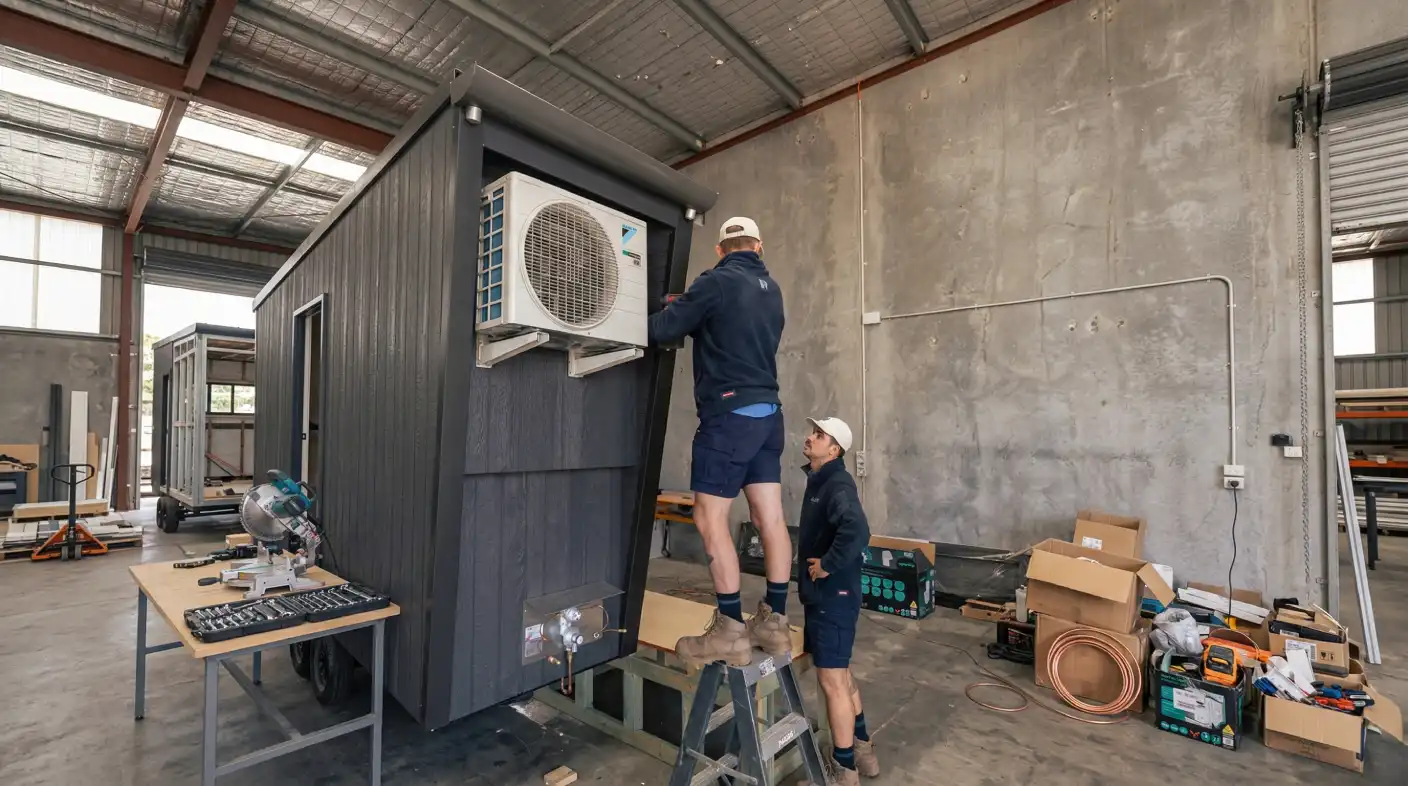
Technicians installing an air conditioning system for optimal performance in Perth’s hot summers.

What Is Split System Air Conditioning and How Does It Work?

By UncategorizedNo Comments
Professional technician installing air conditioning system for Perth’s hot summers.

What Is Split System Air Conditioning and How Does It Work?

When Perth’s summer temperatures rise, keeping your home comfortable becomes a priority. One of the most popular heating and cooling solutions for Australian homes is split-system air conditioning. But have you ever wondered what split-system air conditioning is and why so many homeowners choose it?

A split system air conditioner is an energy-efficient climate control system designed to heat or cool a specific room or area of your home. It consists of two main components: an indoor unit mounted on a wall inside the room and an outdoor unit positioned outside the property. These units work together to regulate indoor temperatures while operating quietly and efficiently.

At Alby Electrical & Air, we help Perth homeowners choose, install, and maintain split system air conditioning solutions that suit their property, lifestyle, and budget. Whether you need cooling for a single room or multiple living spaces, understanding how these systems work can help you make a more informed decision.

How Does Split System Air Conditioning Work?

The term “split system” comes from the fact that the air conditioning system is divided into two separate units.

Indoor Unit

The indoor unit is installed inside the room you want to cool or heat. It draws in air from the room, adjusts the temperature, and circulates the conditioned air back into the space.

Outdoor Unit

The outdoor unit contains the compressor and condenser. It releases heat from inside your home during cooling mode or absorbs heat from outside during heating mode.

These two units are connected through refrigerant piping and electrical wiring, allowing them to work together efficiently. This setup helps reduce indoor noise levels while providing effective temperature control.

Why Are Split System Air Conditioners So Popular?

Split systems have become one of the most common air conditioning choices across Perth because they offer a balance of performance, affordability, and energy efficiency.

Energy Efficiency

Modern split system air conditioners consume less power while maintaining comfortable indoor temperatures. Many systems feature inverter technology, which adjusts compressor speed according to demand rather than constantly switching on and off.

This can lead to lower electricity consumption and reduced energy bills when compared to older cooling systems. Energy-efficient cooling is one of the main reasons Perth homeowners choose split systems.

Heating and Cooling in One System

Many split systems are reverse-cycle units, meaning they can provide both cooling during summer and heating during winter. Instead of installing separate systems for each season, you can enjoy year-round comfort from a single unit.

Quiet Operation

Because the compressor is located outside the home, split systems operate much more quietly than some alternative air conditioning options. This makes them ideal for bedrooms, home offices, nurseries, and living areas where noise can be disruptive.

Affordable Installation

Compared to larger ducted systems, split systems often involve a lower upfront investment. They are particularly cost-effective when you only need climate control for specific areas rather than the entire house.

Improved Indoor Comfort

Many modern units include advanced filtration systems that help remove dust, allergens, and airborne particles. This can contribute to improved indoor air quality and a more comfortable living environment.

Where Are Split System Air Conditioners Best Used?

Split systems are ideal for cooling or heating individual rooms and specific zones within a home.

Common installation locations include:

Because they focus on a targeted area rather than an entire property, split systems provide excellent temperature control without wasting energy on unused rooms.

Split System vs Ducted Air Conditioning

Many homeowners wonder whether a split system or a ducted system is the better option.

Split System Air Conditioning

Best for:

Advantages:

Ducted Air Conditioning

Best for:

Advantages:

At Alby Electrical & Air, we assess factors such as room size, home layout, insulation, and household usage patterns to recommend the most suitable air conditioning solution.

What Is a Multi-Split System?

A multi-split system is similar to a standard split system but allows multiple indoor units to connect to a single outdoor unit.

This setup is ideal for:

Each indoor unit can usually be controlled independently, allowing different rooms to maintain different temperatures. This provides greater flexibility while helping improve overall energy efficiency.

How to Choose the Right Split System Size

Choosing the correct system size is one of the most important steps in achieving efficient performance.

A unit that is too small may struggle to cool or heat the room effectively. A system that is too large can cycle on and off too frequently, increasing energy consumption and reducing efficiency.

Factors that influence sizing include:

Professional assessment ensures the system is correctly matched to your home’s requirements. This helps maximise comfort, efficiency, and system lifespan.

Why Professional Installation Matters

While purchasing an air conditioner may seem straightforward, proper installation is essential for long-term performance.

Incorrect installation can lead to:

Professional installation ensures correct positioning, electrical connections, refrigerant setup, drainage, and system testing. Licensed technicians can also assess your home’s electrical capacity and determine whether upgrades are required for safe operation.

Industry discussions among Perth homeowners and technicians frequently highlight the importance of using qualified installers, as poor installation can lead to costly repairs and warranty complications.

Technicians installing an air conditioning system for optimal performance in Perth’s hot summers.

Maintaining Your Split System Air Conditioner

Like any major household appliance, split systems perform best when maintained regularly.

Routine maintenance may include:

Regular servicing can help improve efficiency, reduce breakdown risks, extend system lifespan, and keep operating costs under control. Consider contacting us to learn more about maintaining your split system air conditioner.

Signs You May Need a New Split System

If your current air conditioner is showing any of the following signs, it may be time to consider an upgrade:

Modern systems offer significantly improved energy efficiency and comfort features compared to older models, making replacement a worthwhile investment for many Perth households.

Why Perth Homeowners Choose Split Systems

Perth’s climate creates unique cooling and heating demands throughout the year. Split system air conditioning offers a practical solution by delivering targeted comfort, energy efficiency, and reliable year-round performance.

Whether you’re cooling a single bedroom, upgrading a living area, or improving comfort in a home office, split systems provide a flexible and cost-effective option for many households. Their combination of affordability, quiet operation, and efficient temperature control makes them one of the most popular air conditioning choices across Western Australia.

Trusted Split System Air Conditioning in Perth

At Alby Electrical & Air, we provide professional split system air conditioning installation, maintenance, and repair services throughout Perth. Our experienced and licensed team takes the time to understand your property, recommend the right solution, and ensure every installation is completed to the highest standard.

We’re committed to delivering reliable comfort, energy-efficient solutions, and quality work that Perth homeowners can trust, whether it is about helping you select the ideal system or ongoing maintenance and support.

Frequently Asked Questions

What is a split system air conditioner?

A split system air conditioner is a heating and cooling system that consists of an indoor unit and an outdoor unit connected by refrigerant pipes and electrical wiring. It is designed to efficiently control the temperature of a specific room or area within a home.

Are split system air conditioners energy efficient?

Yes, modern split system air conditioners are highly energy efficient, especially models with inverter technology. They adjust their output based on the room’s temperature requirements, helping reduce energy consumption and lower electricity bills.

How do I know what size split system air conditioner I need?

The right size depends on factors such as room dimensions, ceiling height, insulation, window placement, and sun exposure. A professional assessment can help determine the most suitable system to ensure optimal comfort and efficiency.

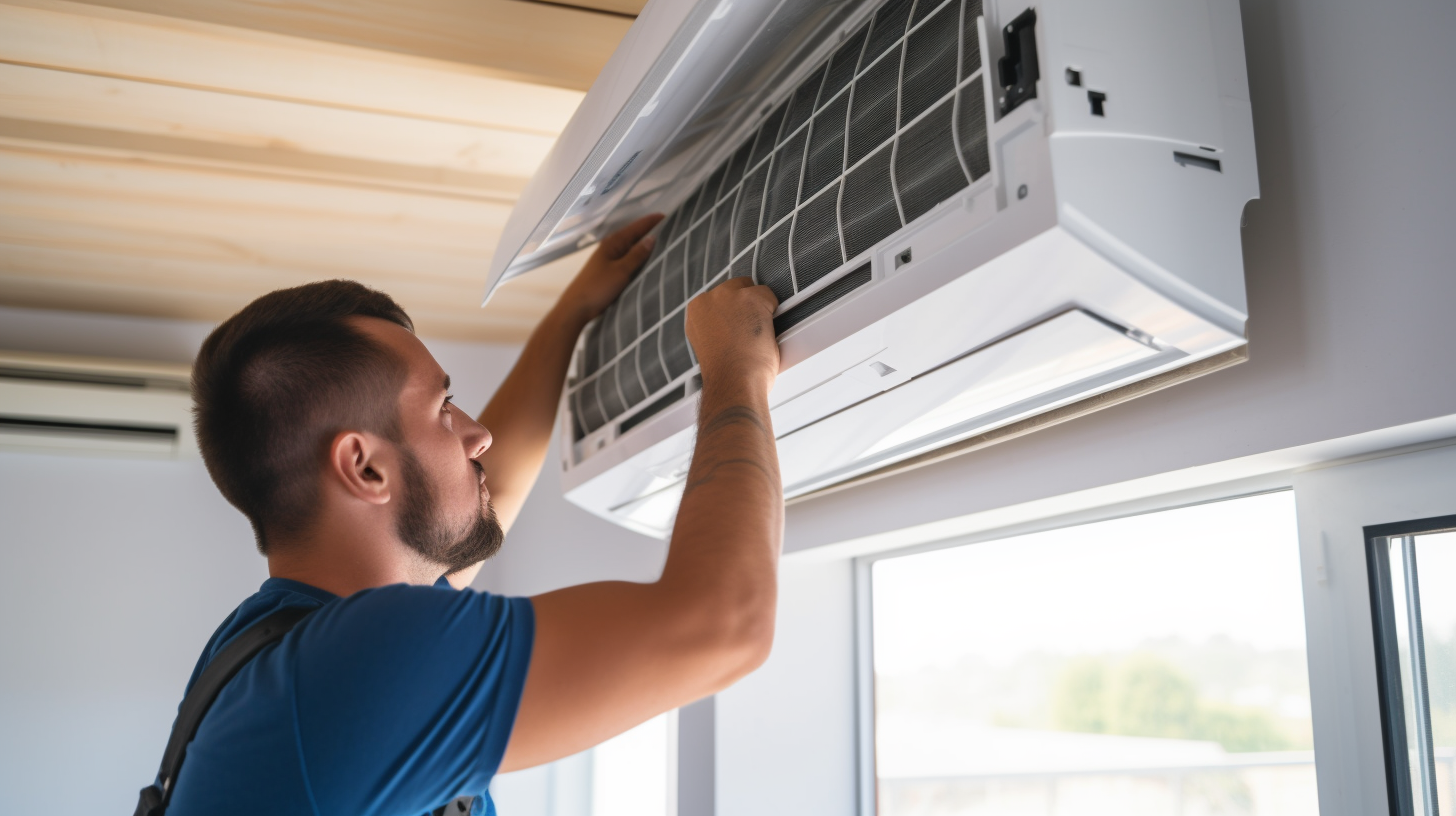
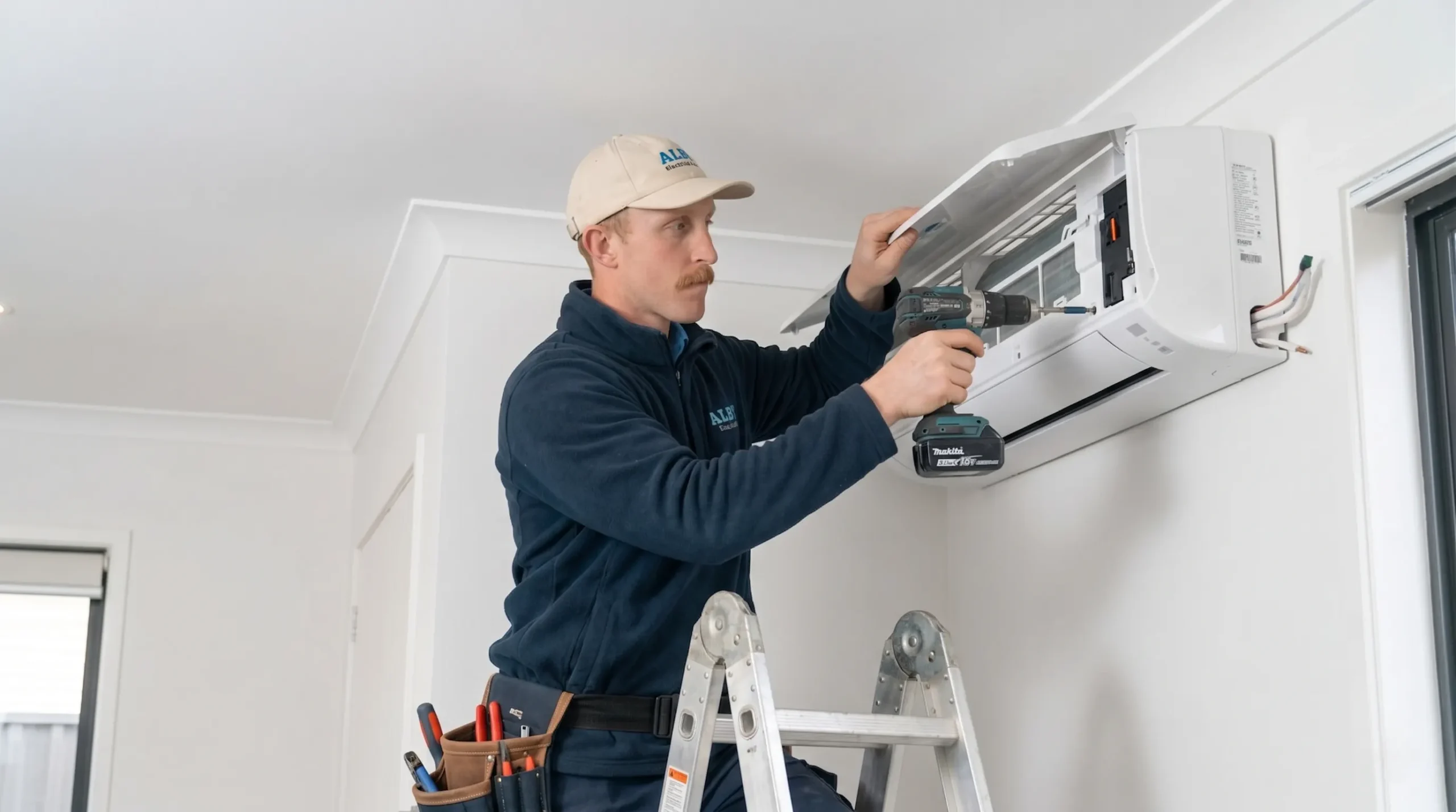
Technician installing a wall-mounted air conditioner while standing on a ladder indoors
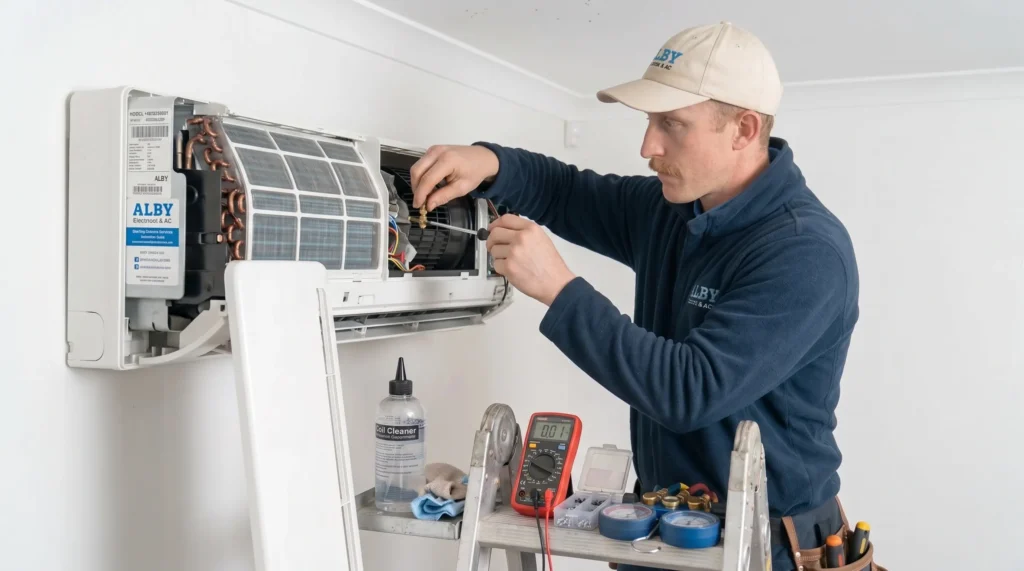
Technician repairing a wall-mounted air conditioner while standing on a ladder indoors.

How Often Should Air Conditioning Ducts Be Cleaned for Better Indoor Air Quality?

By UncategorizedNo Comments
Technician repairing a wall-mounted air conditioner while standing on a ladder indoors.

How Often Should Air Conditioning Ducts Be Cleaned for Better Indoor Air Quality?

Your air conditioner works hard through a Perth summer, and most of that work happens out of sight. Air gets pulled in, cooled, and pushed back out through a network of ducts running behind your walls and above your ceilings. Over time, those ducts collect dust, pet hair, pollen, and the occasional unwelcome visitor. When that buildup gets bad enough, the air you breathe at home carries it along for the ride.

So the question many homeowners eventually ask is simple: how often should air conditioning ducts be cleaned? The short answer is every three to five years for most Perth households, but the real answer depends on how you live and what your system is dealing with.

The General Rule of Thumb

For a typical home, cleaning your ducts every three to five years keeps things in good shape. That window suits most families who run their cooling regularly through summer and the occasional cold snap in winter.

But a rule of thumb is just a starting point. A two-person household in a newer, well-sealed home will sit comfortably at the five-year mark. A busy family with kids, pets, and an older system might be better off closer to three years, or even sooner. The aim is clean air moving freely, not ticking a box on a calendar.

Signs Your Ducts Need Cleaning Sooner

Sometimes your system tells you it needs attention well before the next scheduled clean. Keep an eye, and a nose, out for these:

If you spot a few of these together, your ducts are probably overdue. Restricted airflow forces the unit to work harder, which quietly pushes up running costs and shortens the life of the equipment.

What Affects How Often You Should Clean

No two homes are the same, and a handful of factors move the timeline up or down.

Pets in the Home

Dogs and cats shed constantly, and a fair bit of that fur and dander ends up circulating through the system. Homes with pets often need cleaning closer to every two to three years.

Allergies and Health Conditions

If someone in the house has asthma, hay fever, or another respiratory condition, cleaner ducts make a real difference to daily comfort. Shortening the interval is a sensible call.

Renovations and Building Work

Sanding, cutting, and demolition throw enormous amounts of fine dust into the air, and ducts act like a magnet for it. After any major renovation, a cleaning is worth booking regardless of when the last one happened.

Your Local Environment

Perth’s dry, dusty stretches and the pollen that comes with spring both add to the load your system handles. Homes near busy roads or building sites tend to gather grime faster, too.

Why Indoor Air Quality Is Worth the Effort

We spend a huge share of our lives indoors, so the quality of the air at home matters more than most people realise. Dusty ducts recirculate the same particles over and over, which is bad news for anyone sensitive to allergens. Clean ducts mean fresher air, fewer irritants, and a home that simply feels better to be in.

There’s a practical upside as well. A clean system breathes easily, cools evenly, and uses less power doing it. That’s a win for your comfort and your bills.

Think of duct cleaning the way you think of servicing your car. You don’t wait for the engine to fail before you change the oil. A little regular care keeps everything running smoothly and saves you from bigger problems later.

Professional technician installing air conditioning system for Perth’s hot summers.

Cleaning Versus Servicing

It helps to know the difference between two jobs that often get lumped together. Duct cleaning clears out the pathways through which the air travels. A broader service, like the air conditioning maintenance our Perth team handles, looks after the whole system: filters, coils, the unit itself, and the electrical components that keep it all safe.

Pairing the two is smart. Cleaning the ducts while the rest of the system gets a proper once-over means everything works together as it should, and any small faults get caught before they grow.

Getting It Done Properly

Duct cleaning is best left to professionals with the right gear. A thorough job uses specialised equipment to dislodge and capture buildup without scattering it through your home. Done well, it’s quick, clean, and you’ll often notice the difference in airflow straight away.

If you’re not sure when your ducts were last cleaned, that’s usually a sign it’s been too long. A qualified technician can assess the state of your system and recommend a schedule that fits your household rather than a generic one.

Booking a cleaning every few years, and sooner when the signs point that way, is one of the easiest ways to protect both your indoor air and your air conditioner. If you’d like a hand sorting out your system, get in touch with the Alby Electrical & Air team and we’ll point you in the right direction.

Technician repairing a wall-mounted air conditioner while standing on a ladder indoors.
Photoelectric Smoke Alarms

Where Should Smoke Alarms Be Installed in Your Home?

By UncategorizedNo Comments
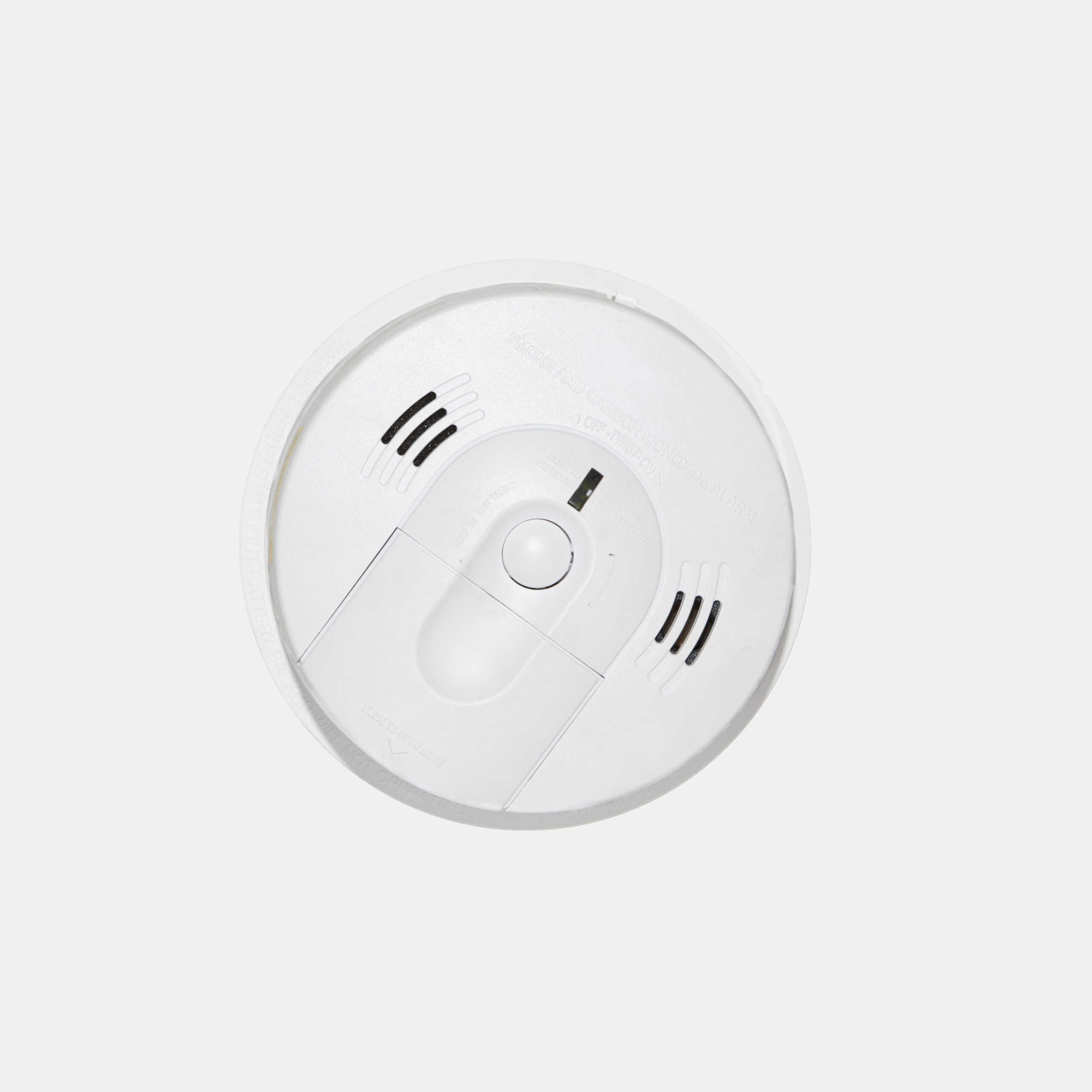
smoke carbon monoxide alarm isolated white background scaled

Where Should Smoke Alarms Be Installed in Your Home?

A working smoke alarm in the right spot can give your family the minutes they need to escape a house fire. Get the placement wrong, and even the best alarm becomes background décor. Whether you’re a homeowner in Inglewood, a landlord in Bayswater or renovating in Mount Lawley, here’s a clear guide to where smoke alarms should be installed in your Perth home.

What WA Law Says About Smoke Alarms

In Western Australia, the Building Regulations 2012 set out where and how smoke alarms must be installed. Compliant alarms are required in any home built or substantially renovated since July 1997, and before any property is sold, rented or hired out from October 2009 onwards.

The rules require:

DFES recommends photoelectric alarms across the board, since they detect smouldering fires earlier than ionisation models. In older homes around Bassendean and Mount Lawley, we still come across battery-only or expired units that should have been swapped out years ago.

Where to Install Smoke Alarms, Room by Room

Australian Standards and the National Construction Code spell out the minimum locations. Aim for these as a baseline, then add more for better coverage.

Bedrooms and hallways

Install an alarm in the corridor or hallway directly outside every sleeping area. If your bedrooms are spread across different parts of the home, you’ll need an alarm for each cluster. We also recommend fitting one inside each bedroom. A closed door buys you time in a fire, but it also muffles a hallway alarm, so the in-room unit is often what actually wakes a heavy sleeper.

Living areas

Living rooms and family rooms aren’t always required by law, but they’re where many house fires start, often from electrical faults, heaters or unattended appliances. A lot of the urgent callouts we attend trace back to these rooms, which is why an alarm in your main living space is one of the simplest upgrades you can make.

Multi-storey homes

Every storey needs at least one smoke alarm, including levels without bedrooms. On a level with no bedrooms, place the alarm along the most likely escape path, typically near the top or bottom of the staircase. If you’d like a licensed Sparky to handle the installation across every level, our team can take care of smoke alarm installation across Perth and make sure each unit is interconnected and compliant.

Garages, granny flats and outbuildings

Standard photoelectric alarms aren’t suitable for garages because of vehicle exhaust and dust. For these spaces, use specialised alarms designed under AS 1670. Granny flats and self-contained studios count as separate dwellings and need their own compliant setup, something we often retrofit when sleepouts get converted for tenants.

How to Position Each Alarm Correctly

Even the right alarm in the right room can underperform if it’s mounted poorly. Follow these placement basics:

These distances aren’t fussy bureaucracy. Smoke pools in tight ceiling corners and stalls under air-con vents, enough to delay an alarm by minutes. We pick this up on a lot of compliance checks: units fitted, but in spots where they’ll do the least good.

How Do I Stop My Smoke Alarm from Beeping? A Complete Australian Guide

Where Not to Install Smoke Alarms

Just as much as knowing where to put them, it pays to know where to keep them away from. Avoid:

Repeated false alarms are the main reason householders disable units, and a disabled alarm is no alarm at all. The classic case we see is an alarm fitted too close to an open-plan kitchen, then quietly disconnected after one too many burnt-toast triggers.

When to Call a Licensed Electrician

In WA, only a licensed electrician can legally install or replace hardwired smoke alarms. If your alarms are over 10 years old, beeping intermittently, missing from any required location or simply not interconnected, it’s time for an upgrade.

At Alby Electrical & Air, we install, replace and interconnect compliant photoelectric alarms across Perth’s eastern and northern suburbs, from Inglewood and Maylands through to Kalamunda. Get in touch with our team for a quick on-site assessment and a fixed quote, and let’s make sure your home meets WA standards before it really matters.

Do Electricians Install Smoke Alarms? Everything You Need to Know

Do Electricians Install Smoke Alarms? Everything You Need to Know

By UncategorizedNo Comments
Do Electricians Install Smoke Alarms? Everything You Need to Know

Do Electricians Install Smoke Alarms? Everything You Need to Know

Yes, and in most Australian homes, they have to. If your alarm runs off mains power, only a licensed electrician can legally install or replace it. Here’s what WA law requires, what your sparky actually does on the day, and when you can fit one yourself.

The Short Answer: Yes, in Most Cases

Smoke alarms come in two main types: hardwired (240V mains-powered) and battery-only. Hardwired units connect to your home’s electrical circuit, which means they must be fitted by a licensed electrician under WA law. Battery-only photoelectric alarms with sealed 10-year lithium batteries can be installed by anyone, but they’re only permitted in specific situations, mainly older homes where running cabling isn’t practical.

For new builds, major renovations and most rental properties in Perth, the law requires hardwired interconnected alarms. That puts the job firmly in electrician territory, and on most of the homes we attend across the eastern suburbs, hardwired is what’s already in place.

When You Legally Need an Electrician in WA

The Building Regulations 2012 cover smoke alarm requirements in Western Australia. You’ll need a licensed electrician if your home:

Battery-powered units are only allowed where mains power isn’t available or where the ceiling won’t take cabling, and your local council usually has to sign off. The default across Perth is hardwired, photoelectric and interconnected, all of which need a sparky. We get a lot of pre-settlement calls from owners who only learn about these rules when their conveyancer flags it the week of handover.

What an Electrician Actually Does on the Day

Wondering what you’re paying for? Here’s what a typical smoke alarm install looks like on the job:

Site inspection

Your electrician walks the home, checks existing alarms, determines the correct number and locations under the National Construction Code, and notes any hazards in the roof space.

Power isolation.

All relevant circuits are shut off at the switchboard before any work begins.

Cable run

New mains cabling is run from the switchboard or nearest circuit to each alarm location.

Mounting and wiring

 Each unit is fixed to the ceiling, wired in and interconnected so they all sound together.

Testing and certification

Every alarm is tested live, and you’re issued with documentation confirming compliance.

There’s more to it than cracking a hole in the ceiling. Your sparky is juggling AS 3786:2014 compliance, Building Code placement rules, dead air space and existing circuit loads. On older Perth homes, we’ll often need to plan a cable route around plaster ceilings, ducted air-con or solar wiring already in the roof space, none of which a manual will warn you about. If you’d rather not piece it together on a weekend, our team handles full smoke alarm installation across Perth, from the first quote through to the compliance certificate.

When You Don't Need an Electrician

You can fit or swap a smoke alarm yourself if all of the following apply:

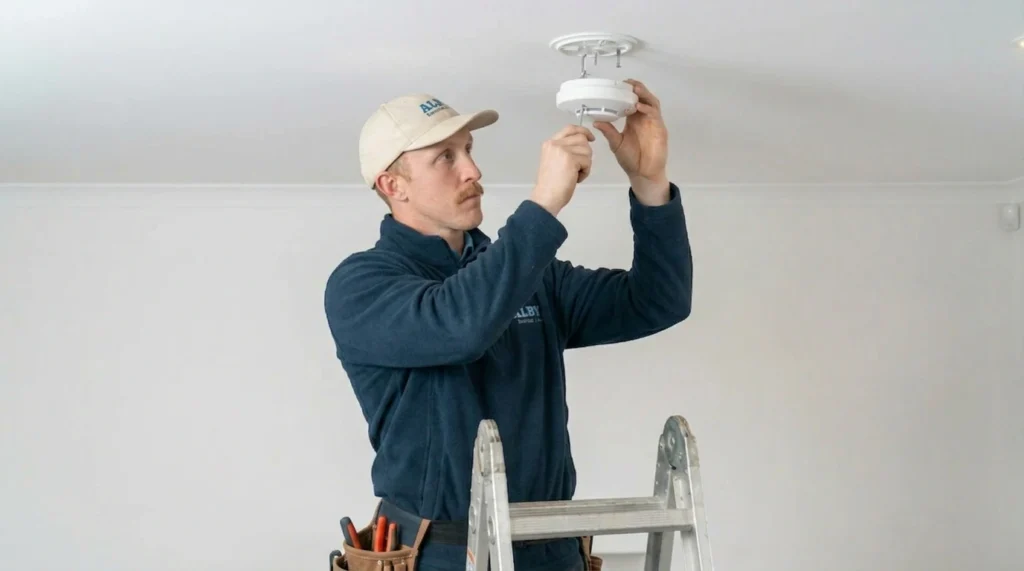
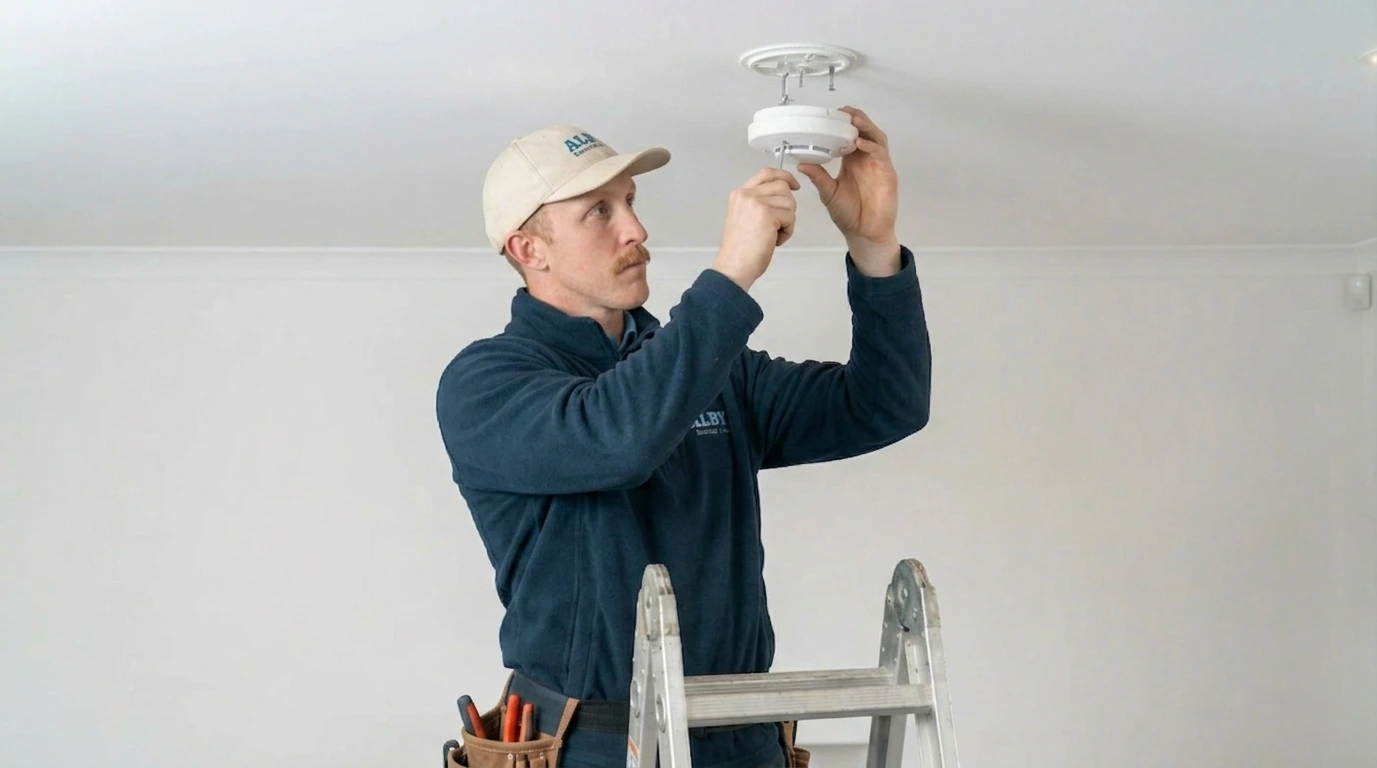
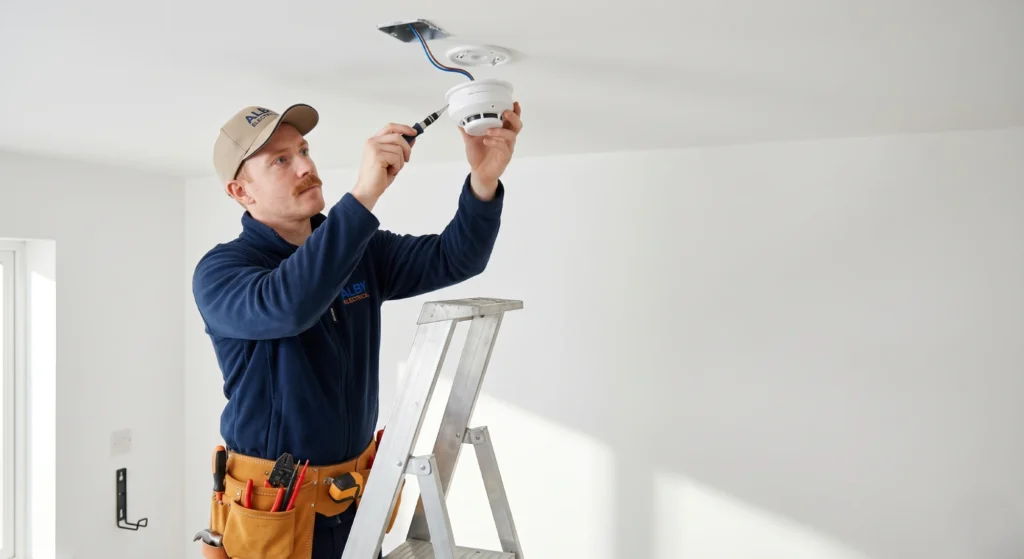
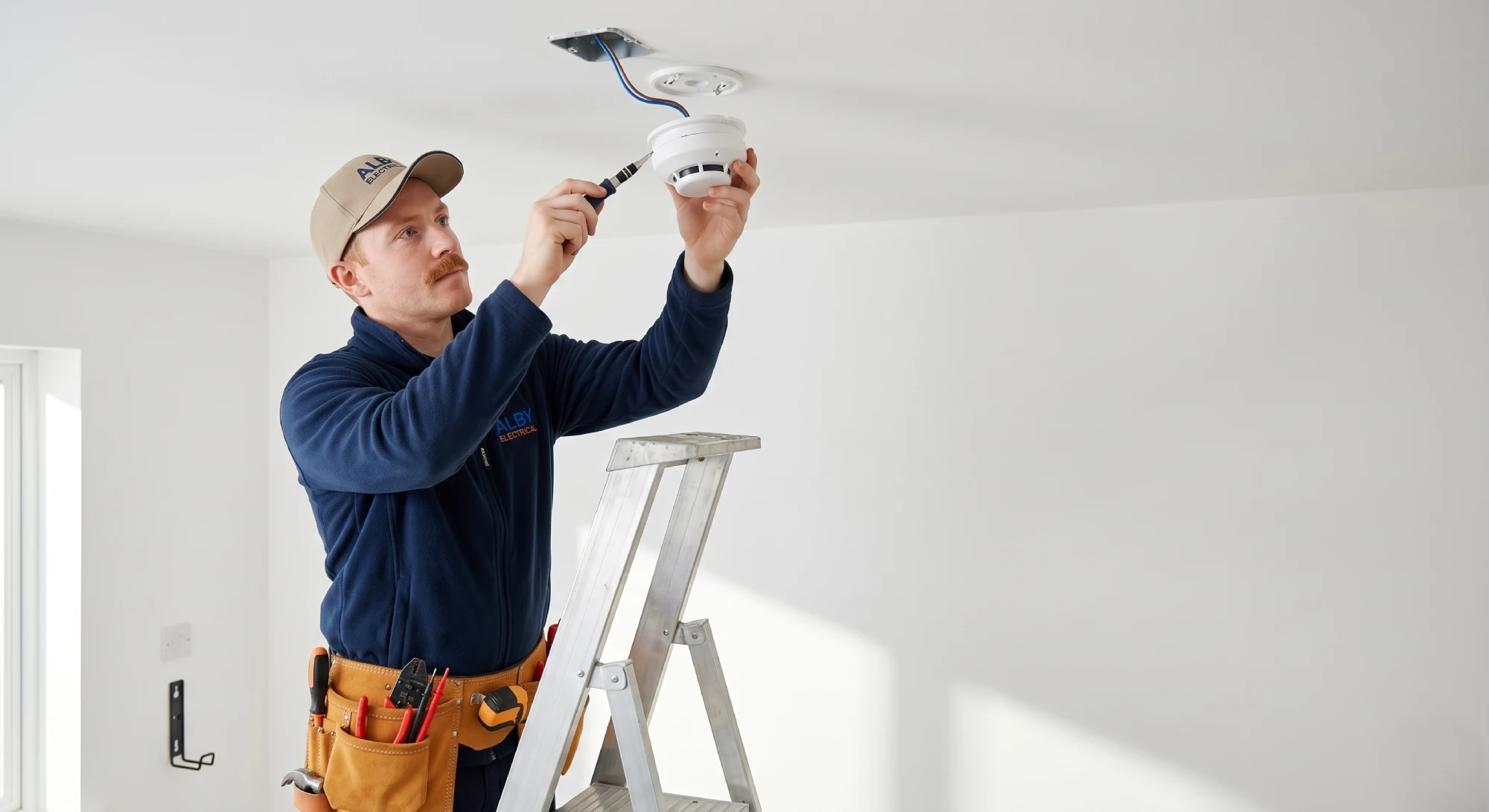
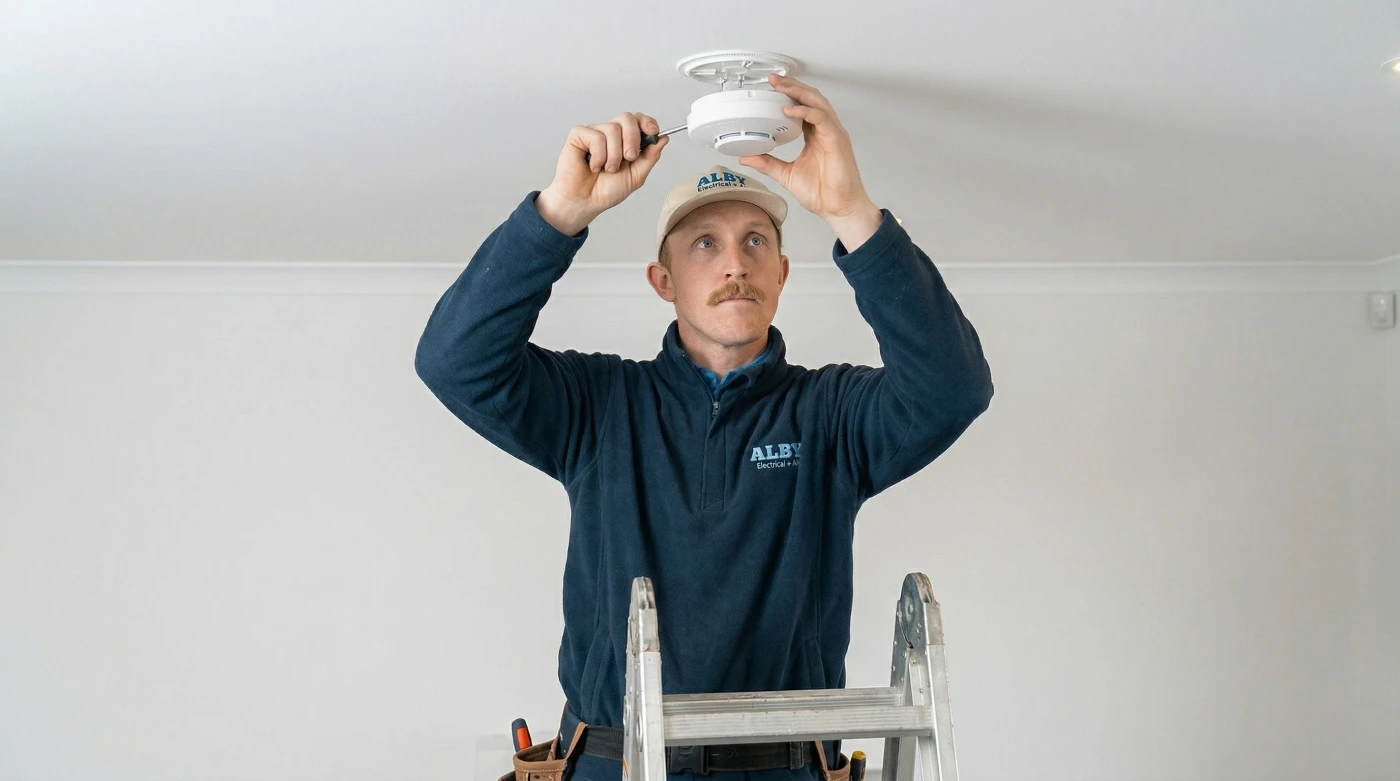
Electrician installing a smoke alarm, highlighting safety standards in Perth.

Even then, you still need to follow the placement rules, mounting heights and clearance distances set out in AS 3786. Wireless interconnect models pair without any cabling, which makes them a sensible option for older homes around Bassendean or Guildford, where threading new cable through original ceilings isn’t practical. Just bear in mind that mixing brands rarely works, so we’d recommend buying a matched set from a single manufacturer.

Why DIY on Hardwired Alarms Isn't Worth It

We see it on callouts more often than you’d think: a homeowner has tried to swap a hardwired alarm themselves, the new unit hasn’t seated properly on the base plate, and the alarm sits silently disconnected from mains. Sometimes it’s wired correctly but isn’t an AS 3786:2014 unit, which fails compliance the moment the house goes up for sale or rent. The other one we run into is a mismatched base plate from an old brand, where the wiring connects, but the unit never powers up.

The risks of going it alone on hardwired alarms include voiding your home insurance, breaching WA Building Regulations, electric shock, and a house full of alarms that don’t actually work when they need to. The cost of a professional install is far smaller than any of those.

When to Call Alby Electrical

If you’re unsure whether your alarms are compliant, when they were last replaced, or whether they’re even all working, get a licensed electrician through to take a look. We install, replace and interconnect compliant photoelectric alarms across Perth’s eastern and northern suburbs, from Inglewood and Maylands through to Kalamunda.

Get in touch with our team for an on-site assessment and a fixed quote, and let’s get your smoke alarms sorted properly.

Can an electrician provide form 16 for emergency lighting

Why You Need Powerpoint Installation

By UncategorizedNo Comments
Can an electrician provide form 16 for emergency lighting

Why You Need Powerpoint Installation

Running out of powerpoints is more than just inconvenient. It’s frustrating, potentially unsafe, and limits how you use your home. If you’re relying on double adaptors or power boards daily, it’s time to consider proper powerpoint installation.

In Perth homes, particularly older properties with double brick walls, strategic powerpoint placement can transform how efficiently your space functions. Here’s why professional powerpoint installation matters and when you should book an electrician.

Safety Risks of Overloaded Circuits

One of the biggest reasons you need powerpoint installation is safety. Using multiple power boards from a single outlet creates serious fire risks through circuit overload.

When too many devices draw power from one point, the wiring heats up. This can damage insulation, create sparking, and in worst cases, cause electrical fires. Having worked on hundreds of Perth homes over the years, we’ve seen the damage that overloaded circuits can cause when left unchecked.

Proper powerpoint installation spreads your electrical demand across circuits safely. A licensed electrician assesses your current load, checks circuit capacity, and installs outlets where they’re genuinely needed.

Modern Homes Need More Power Access

Perth homes today use far more electrical devices than properties built even 20 years ago. Think about what you plug in daily: laptops, phone chargers, coffee machines, air fryers, gaming consoles, smart home devices, and entertainment systems.

Older homes were designed for basic appliances. Two power points per bedroom seemed adequate when people only needed bedside lamps. Now, you’re charging devices, running heaters, using hair straighteners, and potentially working from home.

This mismatch between supply and demand is why powerpoint installation has become necessary. Adding outlets in the right locations means you can actually use your space the way you live now, not how homes functioned decades ago.

1. Photoelectric Smoke Alarms Only

Ionisation smoke alarms are now non-compliant. The law requires photoelectric smoke alarms that meet Australian Standard AS 3786:2014. These alarms are superior at detecting slow-burning, smouldering fires, which are the most common type in Australian homes. They respond quickly to visible smoke, giving occupants more time to escape.

Always check that your new alarm has the AS 3786:2014 certification clearly printed on it.

2. Hardwired to Mains Power

Battery-only smoke alarms no longer meet legal requirements. All smoke alarms must be permanently connected to your home’s 240V mains power supply, with a rechargeable battery backup for power outages.

This hardwiring must be completed by a licensed electrician. Only qualified professionals can safely connect smoke alarms to your electrical system and make sure they meet WA compliance standards.

3. Interconnected Throughout the Home

All smoke alarms in your property must be interconnected, meaning when one alarm detects smoke, every alarm in the house sounds simultaneously. This makes sure everyone hears the warning, no matter where they are.

Interconnection can be achieved through hardwiring or wireless radio frequency technology. For older Perth homes, wireless interconnection is often the most practical solution.

Convenience and Home Functionality

Having enough power outlets in the right spots dramatically improves how your home functions. Consider your living room. If your TV wall has only one double outlet but you need to power a television, soundbar, gaming console, streaming device, and modem, you’re forced into messy solutions.

Professional powerpoint installation solves this by placing quad outlets or multiple doubles exactly where the equipment lives. The same logic applies throughout your home: kitchen benches for appliances, home offices for computers and monitors, bedrooms for charging stations, and garages for tools.

Strategic placement removes trailing extension cords across walkways, reduces clutter, and makes every room work harder for you.

Outdoor Entertainment and Functionality

Outdoor Entertainment and Functionality

Perth’s climate means we spend considerable time outdoors. Whether it’s weekend barbecues, garden maintenance, or outdoor lighting, you need power access beyond your back door.

Weatherproof powerpoint installation gives you safe outdoor electricity. These specialised outlets handle Perth’s weather conditions and prevent moisture-related faults that cause nuisance tripping.

Proper outdoor installations support everything from pool equipment and pond pumps to pressure washers and hedge trimmers. They stop dangerous practices like running indoor extension cords through doorways or windows, which creates trip hazards and exposes non-weatherproof equipment to the elements.

Home Office Requirements

Remote work has permanently changed Perth homes. Spare bedrooms and dining tables have become full-time workspaces, but the powerpoints haven’t caught up.

A functional home office needs multiple outlets. At minimum, you’re running a computer, monitor, printer, modem, desk lamp, and charging devices. Attempting this from one double powerpoint creates cable chaos and constant unplugging.

Dedicated powerpoint installation for home offices typically means at least four sockets at desk height. This supports your core equipment with room for flexibility. For video calls and extended computer use, having adequate power access isn’t a luxury; it’s necessary for productivity.

Kitchen and Appliance Demands

Kitchens place the highest electrical demand on Perth homes. Modern cooking involves multiple high-draw appliances operating simultaneously: kettles, toasters, coffee machines, air fryers, mixers, and microwaves.

If your kitchen dates back 20 or 30 years, the powerpoint layout won’t support today’s cooking habits. Insufficient outlets force you into a power board dependency, which creates overload risks in areas where electrical faults are particularly dangerous due to water proximity.

Strategic kitchen powerpoint installation places outlets where appliances actually sit, away from splash zones, and considers circuit capacity. Some kitchens benefit from dedicated circuits for high-use zones, preventing trips when multiple appliances run together.

Future-Proofing Your Property

Technology continues evolving, and electrical demands increase. Installing adequate power points now prepares your home for future needs without requiring extensive electrical work later.

Consider electric vehicle charging, additional air conditioning units, smart home integration, or medical equipment. Properties with well-planned electrical infrastructure adapt to these changes smoothly.

Professional powerpoint installation considers not just today’s needs but anticipated future requirements. This planning saves money and disruption down the track.

Double Brick Perth Homes Need Special Attention

Many Perth properties feature double brick construction. While this provides excellent insulation and durability, it complicates powerpoint installation compared to lightweight wall construction.

Cable routes in double brick walls are less flexible. Access points, wall cavities, and roof space drops all influence where outlets can be practically installed without extensive surface conduit or patching.

This is why professional assessment matters. An experienced electrician evaluates your home’s construction, plans cable routes that work with your walls, and delivers installations that look neat while functioning safely.

When to Book Professional Installation

Several signs indicate you need a PowerPoint installation. You rely on power boards daily in multiple rooms. Outlets feel warm to the touch, or plugs sit loosely. You’re planning renovations or new furniture layouts. You’ve added new appliances without adequate power access. Existing outlets show burn marks or discolouration.

If you notice any combination of these factors, contact a licensed Perth electrician. Professional assessment identifies whether you need simple additions or if circuit upgrades are required for safety.

The Professional Installation Process

Quality powerpoint installation follows a clear process. Your electrician assesses your needs, checks circuit capacity and RCD protection, plans cable routes considering your home’s construction, and installs outlets to Australian electrical standards.

Testing confirms proper earthing, polarity, and safety device operation. Licensed electricians provide compliance documentation, giving you confidence that the work meets Western Australian electrical regulations.

This thorough approach protects your home’s safety and delivers reliable, long-lasting results.

Get Professional Powerpoint Installation in Perth

Contact Alby Electrical on 0415 397 334 or visit albyelectrical.com.au

Your home’s electrical system should support how you actually live. If you’re frustrated by insufficient outlets, concerned about safety, or planning home improvements, professional powerpoint installation solves these challenges.

Alby Electrical provides expert powerpoint installation across Perth. Our licensed electricians assess your specific needs, recommend optimal outlet placement, and complete installations that meet all safety standards. We know Perth’s double brick homes and deliver solutions that work with your property’s construction.

Don’t compromise on safety or convenience. Contact Alby Electrical on 0415 397 334 or visit albyelectrical.com.au to discuss your powerpoint installation needs. Let’s power your space properly.

Legal Requirement for Smoke Alarms in 2026

What Is the Legal Requirement for Smoke Alarms in 2026? A Complete Guide

By UncategorizedNo Comments
Legal Requirement for Smoke Alarms in 2026

What Is the Legal Requirement for Smoke Alarms in 2026? A Complete Guide

That persistent chirping from your smoke detector at 3 am is enough to drive anyone mad. You’re lying there, staring at the ceiling, wondering how something so small can be so incredibly annoying. If you’re asking yourself, “How do I stop my smoke alarm from beeping?” you’re definitely not alone.

The good news? In most cases, that beeping smoke alarm is trying to tell you something simple, and it’s usually an easy fix. Unlike the full, ear-splitting alarm that signals actual smoke or fire, this repetitive chirping is your detector’s way of saying it needs attention.

Before you’re tempted to rip it off the ceiling (please don’t!), let’s walk through the most common reasons your smoke alarm keeps beeping and exactly how to fix each one.

Why Are Smoke Alarm Laws Changing in WA?

The updated regulations are designed to maximise safety by making sure smoke alarms respond faster and alert everyone in the home simultaneously. Traditional battery-operated or ionisation alarms simply don’t meet modern safety standards. The new laws mandate more effective technology that gives Perth families the precious extra seconds needed to evacuate safely during a fire.

The Three Core Legal Requirements for 2026

Western Australia’s smoke alarm regulations are built around three non-negotiable standards. Every residential property in Perth must comply with all three.

1. Photoelectric Smoke Alarms Only

Ionisation smoke alarms are now non-compliant. The law requires photoelectric smoke alarms that meet Australian Standard AS 3786:2014. These alarms are superior at detecting slow-burning, smouldering fires, which are the most common type in Australian homes. They respond quickly to visible smoke, giving occupants more time to escape.

Always check that your new alarm has the AS 3786:2014 certification clearly printed on it.

2. Hardwired to Mains Power

Battery-only smoke alarms no longer meet legal requirements. All smoke alarms must be permanently connected to your home’s 240V mains power supply, with a rechargeable battery backup for power outages.

This hardwiring must be completed by a licensed electrician. Only qualified professionals can safely connect smoke alarms to your electrical system and make sure they meet WA compliance standards.

3. Interconnected Throughout the Home

All smoke alarms in your property must be interconnected, meaning when one alarm detects smoke, every alarm in the house sounds simultaneously. This makes sure everyone hears the warning, no matter where they are.

Interconnection can be achieved through hardwiring or wireless radio frequency technology. For older Perth homes, wireless interconnection is often the most practical solution.

Where Do Smoke Alarms Need to Be Installed?

Placement is just as important as the type of alarm. Western Australian regulations specify exact locations:

  • Every storey: At least one smoke alarm on each level of your home, even if there’s no bedroom on that floor
  • Every hallway: Smoke alarms must be installed in corridors or areas that connect sleeping areas
  • Alternative locations: If there’s no hallway, alarms must be positioned along the most likely exit path

Alarms should be mounted on or near the ceiling, at least 300mm away from walls, ceiling fans, and air conditioning vents for optimal detection.

How Often Do Smoke Alarms Need Replacing?

How Often Do Smoke Alarms Need Replacing?

Smoke alarms have a maximum lifespan of 10 years from the manufacturer’s date, regardless of how well they appear to be working. Check the manufacturer’s date stamped on each alarm. If it’s over a decade old, it must be replaced immediately.

This 10-year rule applies to all smoke alarms, including those that still pass monthly button tests.

Maintenance Responsibilities for Property Owners

If you’re a homeowner, you’re responsible for making sure all smoke alarms are compliant and functional. For landlords, the legal obligation is even more stringent:

  • You must make sure all smoke alarms meet the 2026 standards before leasing, renting, or selling your property
  • Alarms must be tested and confirmed to be working before each new tenancy
  • You’re responsible for the hardwired components and alarm unit replacements

While tenants have basic maintenance duties like monthly testing, the primary compliance responsibility rests with the property owner.

What Are the Penalties for Non-Compliance?

Western Australian authorities take smoke alarm compliance seriously. Properties found without compliant smoke alarms can face significant fines. More importantly, non-compliant alarms compromise the safety of everyone living in or visiting your home.

For rental properties, failing to meet smoke alarm requirements can delay or prevent leasing agreements and potentially expose you to legal liability if a fire-related incident occurs.

Special Considerations for Perth Properties

Rental Properties

Before a property can be legally rented in Perth, it must have a smoke alarm compliance certificate. This certificate confirms that all alarms meet the required standards, are hardwired, interconnected, and correctly positioned.

Properties Being Sold

Smoke alarm compliance is now part of the conveyancing process in Western Australia. Your property must meet all 2026 requirements before settlement can proceed.

Strata Properties

If you live in an apartment or townhouse, smoke alarm compliance can be more complex due to shared electrical systems and strata approval processes. Working with an experienced Perth electrician who knows strata regulations is necessary.

How to Make Sure Your Perth Home Is Compliant

Getting your smoke alarms up to 2026 standards doesn’t have to be stressful. Here’s what to do:

  • Audit your current system: Check how many alarms you have, their age, type, and power source
  • Book a professional assessment: Have a licensed electrician evaluate your property’s specific requirements
  • Schedule installation early: Don’t wait until 2026. Perth electricians will be extremely busy as deadlines approach
  • Keep records: Maintain documentation of installation dates, compliance certificates, and electrician licenses

Why Choose Professional Installation?

Smoke alarm installation might seem straightforward, but proper compliance requires electrical expertise. Our team at Alby Electrical has installed compliant smoke alarm systems across hundreds of Perth homes, and we’ve seen firsthand what works best for different property types. Licensed electricians will:

  • Position alarms correctly according to your building’s specific layout
  • Connect hardwiring safely to mains power with proper circuit protection
  • Set up a reliable interconnection between all alarms
  • Make sure full compliance with the WA Building Regulations 2012
  • Issue a valid certification for rental or sale purposes

We’ve worked with everything from heritage homes in Subiaco to modern apartments in the CBD, so we know the specific challenges Perth properties face with compliance upgrades.

Protect Your Perth Home with Alby Electrical

Protect Your Perth Home with Alby Electrical

At Alby Electrical, we specialise in smoke alarm installations that meet all 2026 legal requirements for Perth homes. Our experienced, licensed electricians know Western Australian regulations inside and out, and we’re committed to keeping your family safe.

We’ll assess your property, recommend the right photoelectric alarms, handle all hardwiring and interconnection, and supply the compliance certification you need for peace of mind.

Don’t risk your family’s safety or face compliance penalties. Contact Alby Electrical today at 0415 397 334.