Emergency callouts 0415 397 334
Skip to main content
Monthly Archives

May 2026

Photoelectric Smoke Alarms

Where Should Smoke Alarms Be Installed in Your Home?

By UncategorizedNo Comments
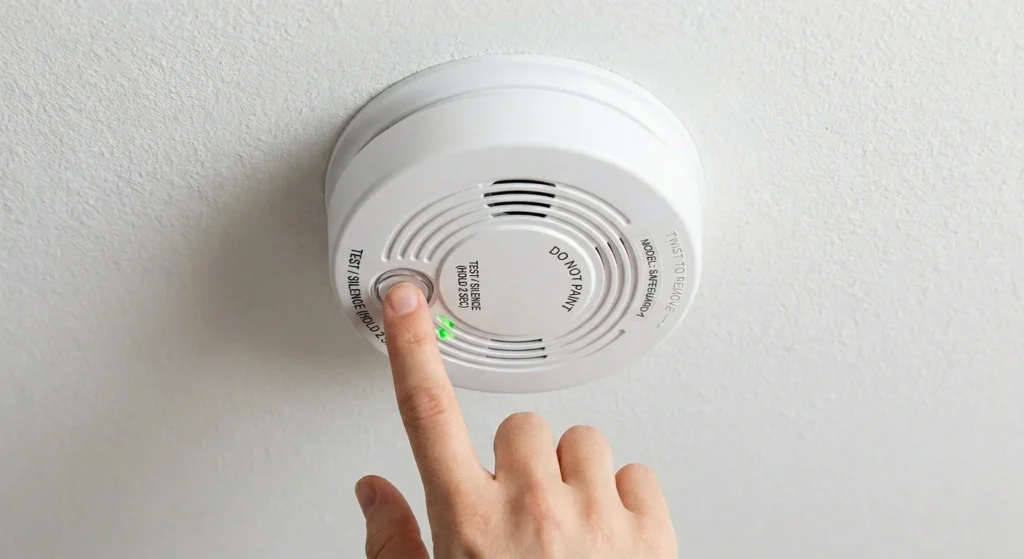
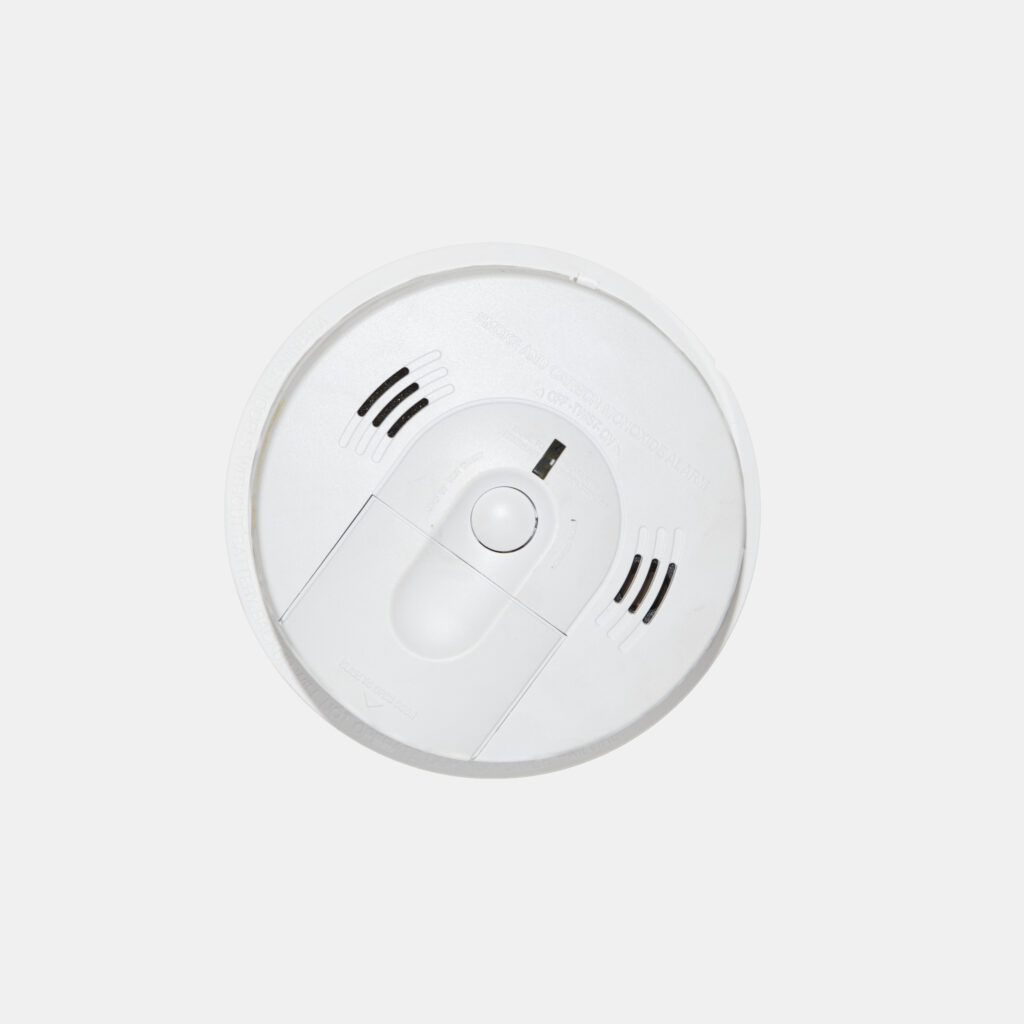
smoke carbon monoxide alarm isolated white background scaled

Where Should Smoke Alarms Be Installed in Your Home?

A working smoke alarm in the right spot can give your family the minutes they need to escape a house fire. Get the placement wrong, and even the best alarm becomes background décor. Whether you’re a homeowner in Inglewood, a landlord in Bayswater or renovating in Mount Lawley, here’s a clear guide to where smoke alarms should be installed in your Perth home.

What WA Law Says About Smoke Alarms

In Western Australia, the Building Regulations 2012 set out where and how smoke alarms must be installed. Compliant alarms are required in any home built or substantially renovated since July 1997, and before any property is sold, rented or hired out from October 2009 onwards.

The rules require:

DFES recommends photoelectric alarms across the board, since they detect smouldering fires earlier than ionisation models. In older homes around Bassendean and Mount Lawley, we still come across battery-only or expired units that should have been swapped out years ago.

Where to Install Smoke Alarms, Room by Room

Australian Standards and the National Construction Code spell out the minimum locations. Aim for these as a baseline, then add more for better coverage.

Bedrooms and hallways

Install an alarm in the corridor or hallway directly outside every sleeping area. If your bedrooms are spread across different parts of the home, you’ll need an alarm for each cluster. We also recommend fitting one inside each bedroom. A closed door buys you time in a fire, but it also muffles a hallway alarm, so the in-room unit is often what actually wakes a heavy sleeper.

Living areas

Living rooms and family rooms aren’t always required by law, but they’re where many house fires start, often from electrical faults, heaters or unattended appliances. A lot of the urgent callouts we attend trace back to these rooms, which is why an alarm in your main living space is one of the simplest upgrades you can make.

Multi-storey homes

Every storey needs at least one smoke alarm, including levels without bedrooms. On a level with no bedrooms, place the alarm along the most likely escape path, typically near the top or bottom of the staircase. If you’d like a licensed Sparky to handle the installation across every level, our team can take care of smoke alarm installation across Perth and make sure each unit is interconnected and compliant.

Garages, granny flats and outbuildings

Standard photoelectric alarms aren’t suitable for garages because of vehicle exhaust and dust. For these spaces, use specialised alarms designed under AS 1670. Granny flats and self-contained studios count as separate dwellings and need their own compliant setup, something we often retrofit when sleepouts get converted for tenants.

How to Position Each Alarm Correctly

Even the right alarm in the right room can underperform if it’s mounted poorly. Follow these placement basics:

These distances aren’t fussy bureaucracy. Smoke pools in tight ceiling corners and stalls under air-con vents, enough to delay an alarm by minutes. We pick this up on a lot of compliance checks: units fitted, but in spots where they’ll do the least good.
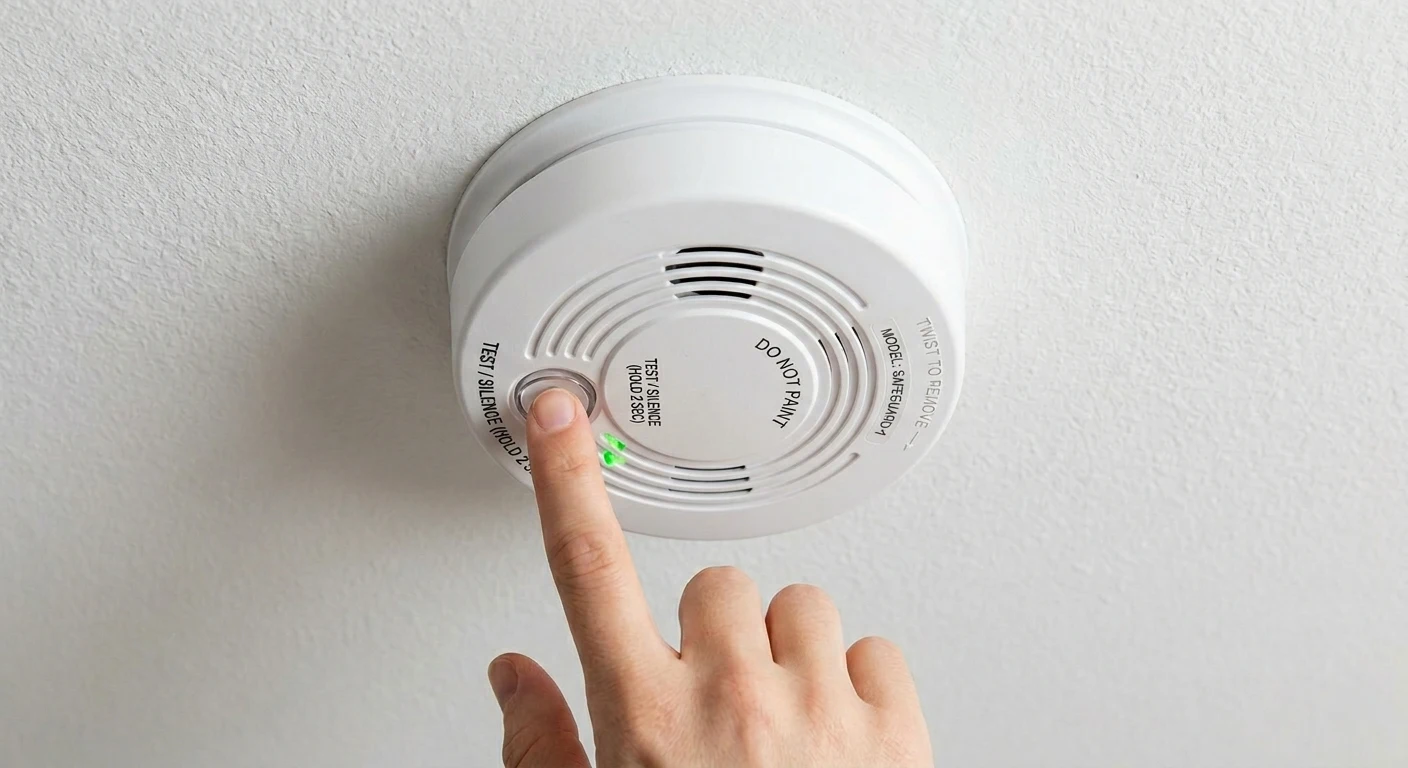
How Do I Stop My Smoke Alarm from Beeping? A Complete Australian Guide

Where Not to Install Smoke Alarms

Just as much as knowing where to put them, it pays to know where to keep them away from. Avoid:

Repeated false alarms are the main reason householders disable units, and a disabled alarm is no alarm at all. The classic case we see is an alarm fitted too close to an open-plan kitchen, then quietly disconnected after one too many burnt-toast triggers.

When to Call a Licensed Electrician

In WA, only a licensed electrician can legally install or replace hardwired smoke alarms. If your alarms are over 10 years old, beeping intermittently, missing from any required location or simply not interconnected, it’s time for an upgrade.

At Alby Electrical & Air, we install, replace and interconnect compliant photoelectric alarms across Perth’s eastern and northern suburbs, from Inglewood and Maylands through to Kalamunda. Get in touch with our team for a quick on-site assessment and a fixed quote, and let’s make sure your home meets WA standards before it really matters.
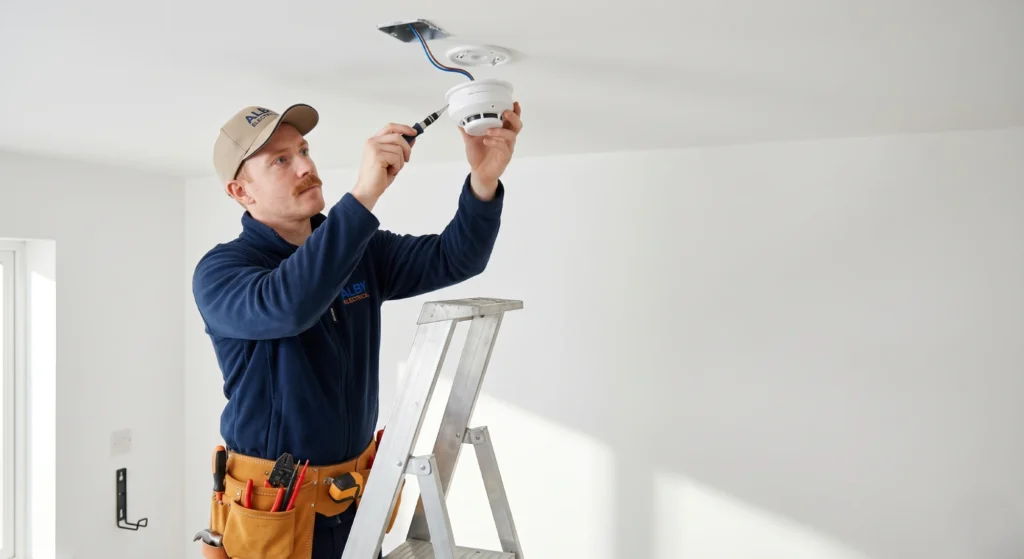
Do Electricians Install Smoke Alarms? Everything You Need to Know

Do Electricians Install Smoke Alarms? Everything You Need to Know

By UncategorizedNo Comments
Do Electricians Install Smoke Alarms? Everything You Need to Know

Do Electricians Install Smoke Alarms? Everything You Need to Know

Yes, and in most Australian homes, they have to. If your alarm runs off mains power, only a licensed electrician can legally install or replace it. Here’s what WA law requires, what your sparky actually does on the day, and when you can fit one yourself.

The Short Answer: Yes, in Most Cases

Smoke alarms come in two main types: hardwired (240V mains-powered) and battery-only. Hardwired units connect to your home’s electrical circuit, which means they must be fitted by a licensed electrician under WA law. Battery-only photoelectric alarms with sealed 10-year lithium batteries can be installed by anyone, but they’re only permitted in specific situations, mainly older homes where running cabling isn’t practical.

For new builds, major renovations and most rental properties in Perth, the law requires hardwired interconnected alarms. That puts the job firmly in electrician territory, and on most of the homes we attend across the eastern suburbs, hardwired is what’s already in place.

When You Legally Need an Electrician in WA

The Building Regulations 2012 cover smoke alarm requirements in Western Australia. You’ll need a licensed electrician if your home:

Battery-powered units are only allowed where mains power isn’t available or where the ceiling won’t take cabling, and your local council usually has to sign off. The default across Perth is hardwired, photoelectric and interconnected, all of which need a sparky. We get a lot of pre-settlement calls from owners who only learn about these rules when their conveyancer flags it the week of handover.

What an Electrician Actually Does on the Day

Wondering what you’re paying for? Here’s what a typical smoke alarm install looks like on the job:

Site inspection

Your electrician walks the home, checks existing alarms, determines the correct number and locations under the National Construction Code, and notes any hazards in the roof space.

Power isolation.

All relevant circuits are shut off at the switchboard before any work begins.

Cable run

New mains cabling is run from the switchboard or nearest circuit to each alarm location.

Mounting and wiring

 Each unit is fixed to the ceiling, wired in and interconnected so they all sound together.

Testing and certification

Every alarm is tested live, and you’re issued with documentation confirming compliance.

There’s more to it than cracking a hole in the ceiling. Your sparky is juggling AS 3786:2014 compliance, Building Code placement rules, dead air space and existing circuit loads. On older Perth homes, we’ll often need to plan a cable route around plaster ceilings, ducted air-con or solar wiring already in the roof space, none of which a manual will warn you about. If you’d rather not piece it together on a weekend, our team handles full smoke alarm installation across Perth, from the first quote through to the compliance certificate.

When You Don't Need an Electrician

You can fit or swap a smoke alarm yourself if all of the following apply:

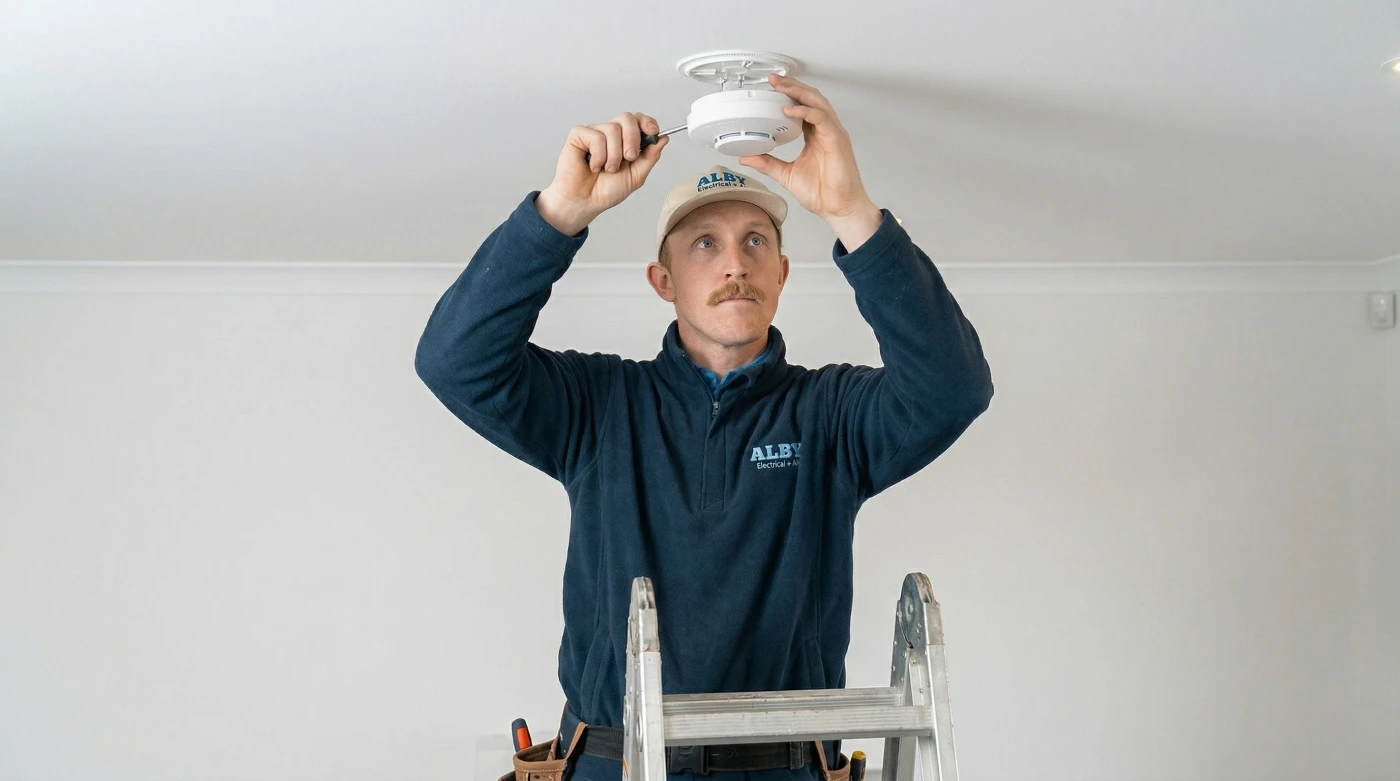
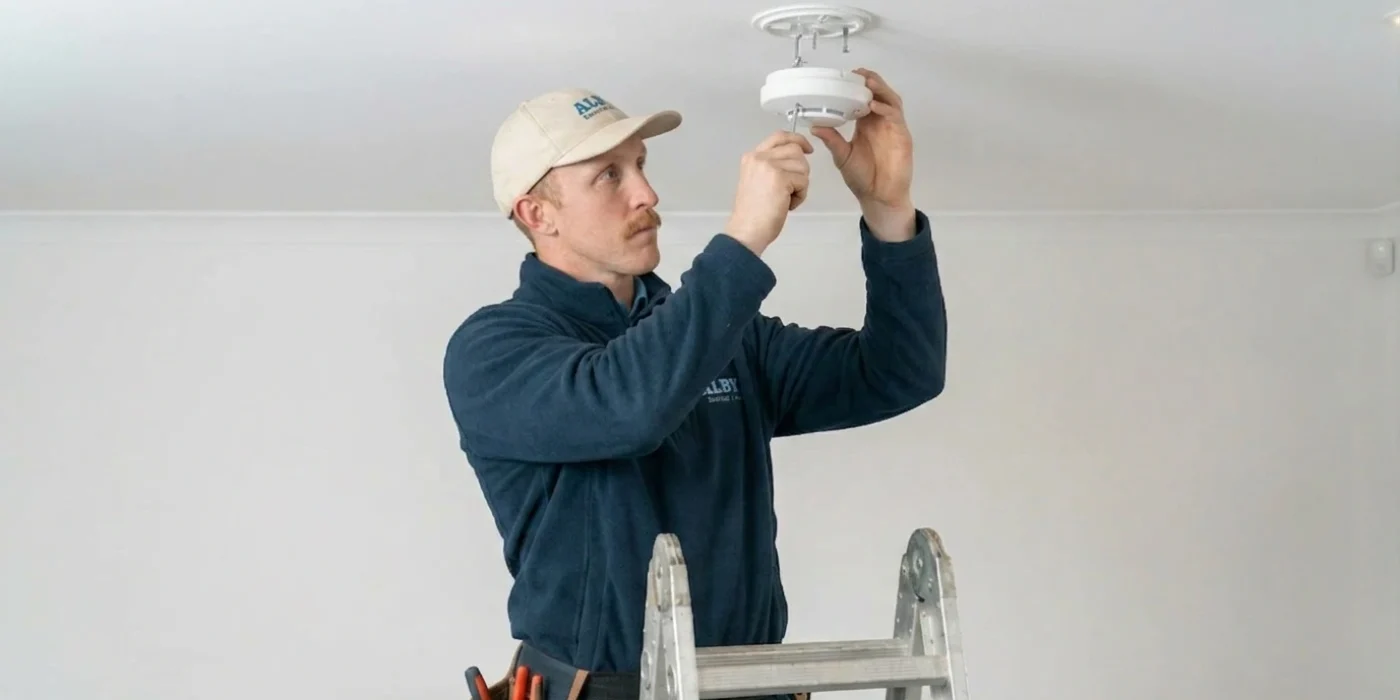
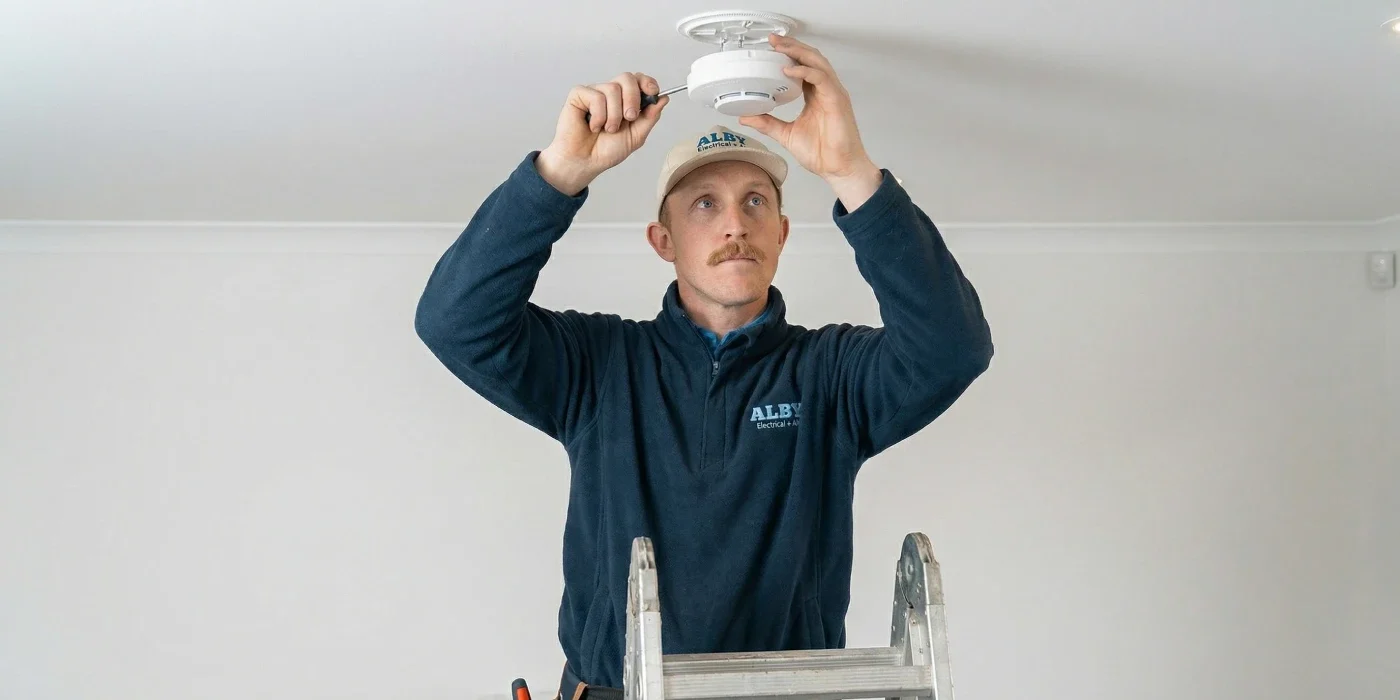
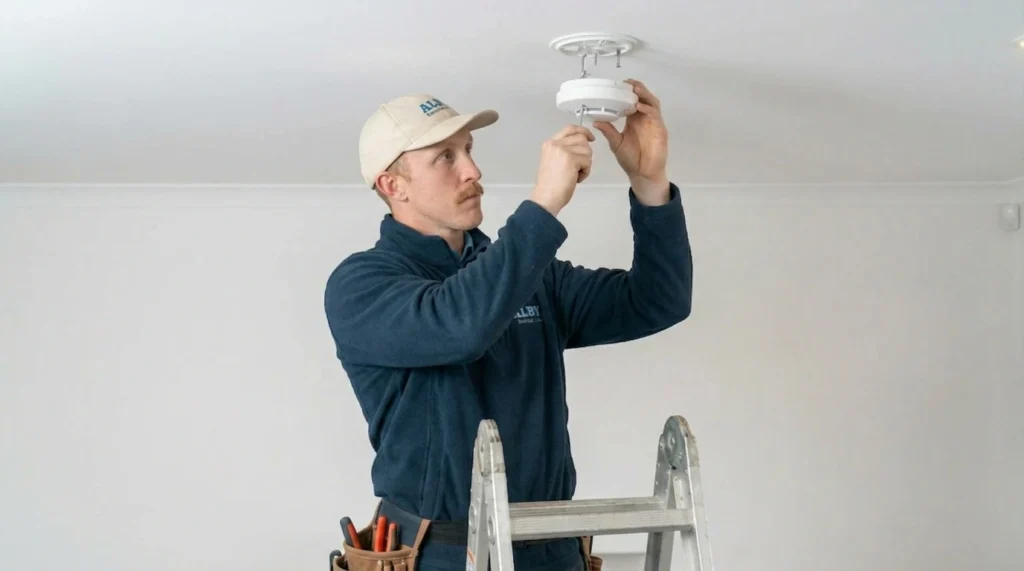
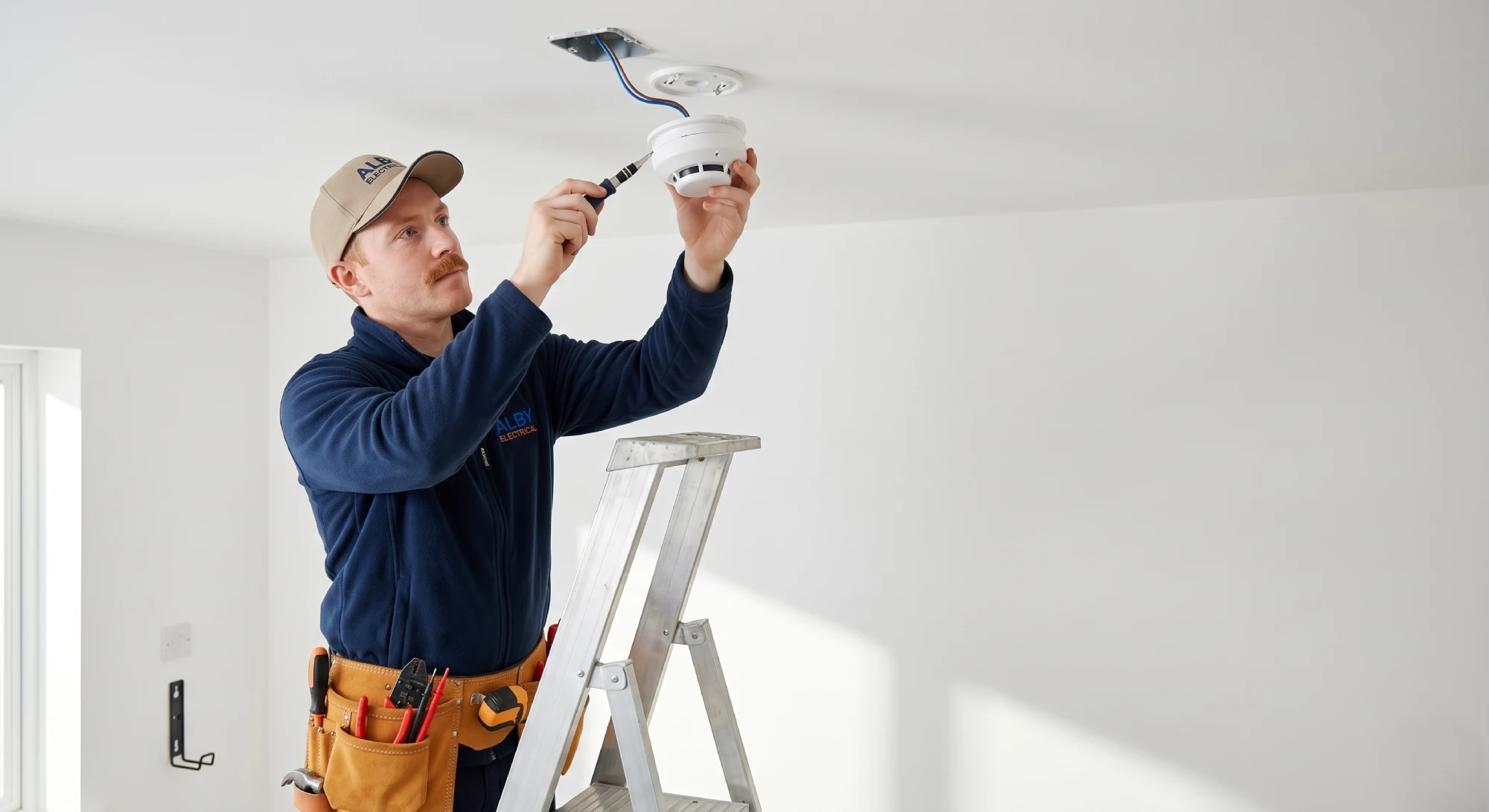
Electrician installing a smoke alarm, highlighting safety standards in Perth.

Even then, you still need to follow the placement rules, mounting heights and clearance distances set out in AS 3786. Wireless interconnect models pair without any cabling, which makes them a sensible option for older homes around Bassendean or Guildford, where threading new cable through original ceilings isn’t practical. Just bear in mind that mixing brands rarely works, so we’d recommend buying a matched set from a single manufacturer.

Why DIY on Hardwired Alarms Isn't Worth It

We see it on callouts more often than you’d think: a homeowner has tried to swap a hardwired alarm themselves, the new unit hasn’t seated properly on the base plate, and the alarm sits silently disconnected from mains. Sometimes it’s wired correctly but isn’t an AS 3786:2014 unit, which fails compliance the moment the house goes up for sale or rent. The other one we run into is a mismatched base plate from an old brand, where the wiring connects, but the unit never powers up.

The risks of going it alone on hardwired alarms include voiding your home insurance, breaching WA Building Regulations, electric shock, and a house full of alarms that don’t actually work when they need to. The cost of a professional install is far smaller than any of those.

When to Call Alby Electrical

If you’re unsure whether your alarms are compliant, when they were last replaced, or whether they’re even all working, get a licensed electrician through to take a look. We install, replace and interconnect compliant photoelectric alarms across Perth’s eastern and northern suburbs, from Inglewood and Maylands through to Kalamunda.

Get in touch with our team for an on-site assessment and a fixed quote, and let’s get your smoke alarms sorted properly.

Can an electrician provide form 16 for emergency lighting

Why You Need Powerpoint Installation

By UncategorizedNo Comments
Can an electrician provide form 16 for emergency lighting

Why You Need Powerpoint Installation

Running out of powerpoints is more than just inconvenient. It’s frustrating, potentially unsafe, and limits how you use your home. If you’re relying on double adaptors or power boards daily, it’s time to consider proper powerpoint installation.

In Perth homes, particularly older properties with double brick walls, strategic powerpoint placement can transform how efficiently your space functions. Here’s why professional powerpoint installation matters and when you should book an electrician.

Safety Risks of Overloaded Circuits

One of the biggest reasons you need powerpoint installation is safety. Using multiple power boards from a single outlet creates serious fire risks through circuit overload.

When too many devices draw power from one point, the wiring heats up. This can damage insulation, create sparking, and in worst cases, cause electrical fires. Having worked on hundreds of Perth homes over the years, we’ve seen the damage that overloaded circuits can cause when left unchecked.

Proper powerpoint installation spreads your electrical demand across circuits safely. A licensed electrician assesses your current load, checks circuit capacity, and installs outlets where they’re genuinely needed.

Modern Homes Need More Power Access

Perth homes today use far more electrical devices than properties built even 20 years ago. Think about what you plug in daily: laptops, phone chargers, coffee machines, air fryers, gaming consoles, smart home devices, and entertainment systems.

Older homes were designed for basic appliances. Two power points per bedroom seemed adequate when people only needed bedside lamps. Now, you’re charging devices, running heaters, using hair straighteners, and potentially working from home.

This mismatch between supply and demand is why powerpoint installation has become necessary. Adding outlets in the right locations means you can actually use your space the way you live now, not how homes functioned decades ago.

1. Photoelectric Smoke Alarms Only

Ionisation smoke alarms are now non-compliant. The law requires photoelectric smoke alarms that meet Australian Standard AS 3786:2014. These alarms are superior at detecting slow-burning, smouldering fires, which are the most common type in Australian homes. They respond quickly to visible smoke, giving occupants more time to escape.

Always check that your new alarm has the AS 3786:2014 certification clearly printed on it.

2. Hardwired to Mains Power

Battery-only smoke alarms no longer meet legal requirements. All smoke alarms must be permanently connected to your home’s 240V mains power supply, with a rechargeable battery backup for power outages.

This hardwiring must be completed by a licensed electrician. Only qualified professionals can safely connect smoke alarms to your electrical system and make sure they meet WA compliance standards.

3. Interconnected Throughout the Home

All smoke alarms in your property must be interconnected, meaning when one alarm detects smoke, every alarm in the house sounds simultaneously. This makes sure everyone hears the warning, no matter where they are.

Interconnection can be achieved through hardwiring or wireless radio frequency technology. For older Perth homes, wireless interconnection is often the most practical solution.

Convenience and Home Functionality

Having enough power outlets in the right spots dramatically improves how your home functions. Consider your living room. If your TV wall has only one double outlet but you need to power a television, soundbar, gaming console, streaming device, and modem, you’re forced into messy solutions.

Professional powerpoint installation solves this by placing quad outlets or multiple doubles exactly where the equipment lives. The same logic applies throughout your home: kitchen benches for appliances, home offices for computers and monitors, bedrooms for charging stations, and garages for tools.

Strategic placement removes trailing extension cords across walkways, reduces clutter, and makes every room work harder for you.

Outdoor Entertainment and Functionality

Outdoor Entertainment and Functionality

Perth’s climate means we spend considerable time outdoors. Whether it’s weekend barbecues, garden maintenance, or outdoor lighting, you need power access beyond your back door.

Weatherproof powerpoint installation gives you safe outdoor electricity. These specialised outlets handle Perth’s weather conditions and prevent moisture-related faults that cause nuisance tripping.

Proper outdoor installations support everything from pool equipment and pond pumps to pressure washers and hedge trimmers. They stop dangerous practices like running indoor extension cords through doorways or windows, which creates trip hazards and exposes non-weatherproof equipment to the elements.

Home Office Requirements

Remote work has permanently changed Perth homes. Spare bedrooms and dining tables have become full-time workspaces, but the powerpoints haven’t caught up.

A functional home office needs multiple outlets. At minimum, you’re running a computer, monitor, printer, modem, desk lamp, and charging devices. Attempting this from one double powerpoint creates cable chaos and constant unplugging.

Dedicated powerpoint installation for home offices typically means at least four sockets at desk height. This supports your core equipment with room for flexibility. For video calls and extended computer use, having adequate power access isn’t a luxury; it’s necessary for productivity.

Kitchen and Appliance Demands

Kitchens place the highest electrical demand on Perth homes. Modern cooking involves multiple high-draw appliances operating simultaneously: kettles, toasters, coffee machines, air fryers, mixers, and microwaves.

If your kitchen dates back 20 or 30 years, the powerpoint layout won’t support today’s cooking habits. Insufficient outlets force you into a power board dependency, which creates overload risks in areas where electrical faults are particularly dangerous due to water proximity.

Strategic kitchen powerpoint installation places outlets where appliances actually sit, away from splash zones, and considers circuit capacity. Some kitchens benefit from dedicated circuits for high-use zones, preventing trips when multiple appliances run together.

Future-Proofing Your Property

Technology continues evolving, and electrical demands increase. Installing adequate power points now prepares your home for future needs without requiring extensive electrical work later.

Consider electric vehicle charging, additional air conditioning units, smart home integration, or medical equipment. Properties with well-planned electrical infrastructure adapt to these changes smoothly.

Professional powerpoint installation considers not just today’s needs but anticipated future requirements. This planning saves money and disruption down the track.

Double Brick Perth Homes Need Special Attention

Many Perth properties feature double brick construction. While this provides excellent insulation and durability, it complicates powerpoint installation compared to lightweight wall construction.

Cable routes in double brick walls are less flexible. Access points, wall cavities, and roof space drops all influence where outlets can be practically installed without extensive surface conduit or patching.

This is why professional assessment matters. An experienced electrician evaluates your home’s construction, plans cable routes that work with your walls, and delivers installations that look neat while functioning safely.

When to Book Professional Installation

Several signs indicate you need a PowerPoint installation. You rely on power boards daily in multiple rooms. Outlets feel warm to the touch, or plugs sit loosely. You’re planning renovations or new furniture layouts. You’ve added new appliances without adequate power access. Existing outlets show burn marks or discolouration.

If you notice any combination of these factors, contact a licensed Perth electrician. Professional assessment identifies whether you need simple additions or if circuit upgrades are required for safety.

The Professional Installation Process

Quality powerpoint installation follows a clear process. Your electrician assesses your needs, checks circuit capacity and RCD protection, plans cable routes considering your home’s construction, and installs outlets to Australian electrical standards.

Testing confirms proper earthing, polarity, and safety device operation. Licensed electricians provide compliance documentation, giving you confidence that the work meets Western Australian electrical regulations.

This thorough approach protects your home’s safety and delivers reliable, long-lasting results.

Get Professional Powerpoint Installation in Perth

Contact Alby Electrical on 0415 397 334 or visit albyelectrical.com.au

Your home’s electrical system should support how you actually live. If you’re frustrated by insufficient outlets, concerned about safety, or planning home improvements, professional powerpoint installation solves these challenges.

Alby Electrical provides expert powerpoint installation across Perth. Our licensed electricians assess your specific needs, recommend optimal outlet placement, and complete installations that meet all safety standards. We know Perth’s double brick homes and deliver solutions that work with your property’s construction.

Don’t compromise on safety or convenience. Contact Alby Electrical on 0415 397 334 or visit albyelectrical.com.au to discuss your powerpoint installation needs. Let’s power your space properly.

Legal Requirement for Smoke Alarms in 2026

What Is the Legal Requirement for Smoke Alarms in 2026? A Complete Guide

By UncategorizedNo Comments
Legal Requirement for Smoke Alarms in 2026

What Is the Legal Requirement for Smoke Alarms in 2026? A Complete Guide

That persistent chirping from your smoke detector at 3 am is enough to drive anyone mad. You’re lying there, staring at the ceiling, wondering how something so small can be so incredibly annoying. If you’re asking yourself, “How do I stop my smoke alarm from beeping?” you’re definitely not alone.

The good news? In most cases, that beeping smoke alarm is trying to tell you something simple, and it’s usually an easy fix. Unlike the full, ear-splitting alarm that signals actual smoke or fire, this repetitive chirping is your detector’s way of saying it needs attention.

Before you’re tempted to rip it off the ceiling (please don’t!), let’s walk through the most common reasons your smoke alarm keeps beeping and exactly how to fix each one.

Why Are Smoke Alarm Laws Changing in WA?

The updated regulations are designed to maximise safety by making sure smoke alarms respond faster and alert everyone in the home simultaneously. Traditional battery-operated or ionisation alarms simply don’t meet modern safety standards. The new laws mandate more effective technology that gives Perth families the precious extra seconds needed to evacuate safely during a fire.

The Three Core Legal Requirements for 2026

Western Australia’s smoke alarm regulations are built around three non-negotiable standards. Every residential property in Perth must comply with all three.

1. Photoelectric Smoke Alarms Only

Ionisation smoke alarms are now non-compliant. The law requires photoelectric smoke alarms that meet Australian Standard AS 3786:2014. These alarms are superior at detecting slow-burning, smouldering fires, which are the most common type in Australian homes. They respond quickly to visible smoke, giving occupants more time to escape.

Always check that your new alarm has the AS 3786:2014 certification clearly printed on it.

2. Hardwired to Mains Power

Battery-only smoke alarms no longer meet legal requirements. All smoke alarms must be permanently connected to your home’s 240V mains power supply, with a rechargeable battery backup for power outages.

This hardwiring must be completed by a licensed electrician. Only qualified professionals can safely connect smoke alarms to your electrical system and make sure they meet WA compliance standards.

3. Interconnected Throughout the Home

All smoke alarms in your property must be interconnected, meaning when one alarm detects smoke, every alarm in the house sounds simultaneously. This makes sure everyone hears the warning, no matter where they are.

Interconnection can be achieved through hardwiring or wireless radio frequency technology. For older Perth homes, wireless interconnection is often the most practical solution.

Where Do Smoke Alarms Need to Be Installed?

Placement is just as important as the type of alarm. Western Australian regulations specify exact locations:

  • Every storey: At least one smoke alarm on each level of your home, even if there’s no bedroom on that floor
  • Every hallway: Smoke alarms must be installed in corridors or areas that connect sleeping areas
  • Alternative locations: If there’s no hallway, alarms must be positioned along the most likely exit path

Alarms should be mounted on or near the ceiling, at least 300mm away from walls, ceiling fans, and air conditioning vents for optimal detection.

How Often Do Smoke Alarms Need Replacing?

How Often Do Smoke Alarms Need Replacing?

Smoke alarms have a maximum lifespan of 10 years from the manufacturer’s date, regardless of how well they appear to be working. Check the manufacturer’s date stamped on each alarm. If it’s over a decade old, it must be replaced immediately.

This 10-year rule applies to all smoke alarms, including those that still pass monthly button tests.

Maintenance Responsibilities for Property Owners

If you’re a homeowner, you’re responsible for making sure all smoke alarms are compliant and functional. For landlords, the legal obligation is even more stringent:

  • You must make sure all smoke alarms meet the 2026 standards before leasing, renting, or selling your property
  • Alarms must be tested and confirmed to be working before each new tenancy
  • You’re responsible for the hardwired components and alarm unit replacements

While tenants have basic maintenance duties like monthly testing, the primary compliance responsibility rests with the property owner.

What Are the Penalties for Non-Compliance?

Western Australian authorities take smoke alarm compliance seriously. Properties found without compliant smoke alarms can face significant fines. More importantly, non-compliant alarms compromise the safety of everyone living in or visiting your home.

For rental properties, failing to meet smoke alarm requirements can delay or prevent leasing agreements and potentially expose you to legal liability if a fire-related incident occurs.

Special Considerations for Perth Properties

Rental Properties

Before a property can be legally rented in Perth, it must have a smoke alarm compliance certificate. This certificate confirms that all alarms meet the required standards, are hardwired, interconnected, and correctly positioned.

Properties Being Sold

Smoke alarm compliance is now part of the conveyancing process in Western Australia. Your property must meet all 2026 requirements before settlement can proceed.

Strata Properties

If you live in an apartment or townhouse, smoke alarm compliance can be more complex due to shared electrical systems and strata approval processes. Working with an experienced Perth electrician who knows strata regulations is necessary.

How to Make Sure Your Perth Home Is Compliant

Getting your smoke alarms up to 2026 standards doesn’t have to be stressful. Here’s what to do:

  • Audit your current system: Check how many alarms you have, their age, type, and power source
  • Book a professional assessment: Have a licensed electrician evaluate your property’s specific requirements
  • Schedule installation early: Don’t wait until 2026. Perth electricians will be extremely busy as deadlines approach
  • Keep records: Maintain documentation of installation dates, compliance certificates, and electrician licenses

Why Choose Professional Installation?

Smoke alarm installation might seem straightforward, but proper compliance requires electrical expertise. Our team at Alby Electrical has installed compliant smoke alarm systems across hundreds of Perth homes, and we’ve seen firsthand what works best for different property types. Licensed electricians will:

  • Position alarms correctly according to your building’s specific layout
  • Connect hardwiring safely to mains power with proper circuit protection
  • Set up a reliable interconnection between all alarms
  • Make sure full compliance with the WA Building Regulations 2012
  • Issue a valid certification for rental or sale purposes

We’ve worked with everything from heritage homes in Subiaco to modern apartments in the CBD, so we know the specific challenges Perth properties face with compliance upgrades.

Protect Your Perth Home with Alby Electrical

Protect Your Perth Home with Alby Electrical

At Alby Electrical, we specialise in smoke alarm installations that meet all 2026 legal requirements for Perth homes. Our experienced, licensed electricians know Western Australian regulations inside and out, and we’re committed to keeping your family safe.

We’ll assess your property, recommend the right photoelectric alarms, handle all hardwiring and interconnection, and supply the compliance certification you need for peace of mind.

Don’t risk your family’s safety or face compliance penalties. Contact Alby Electrical today at 0415 397 334.

How Do I Stop My Smoke Alarm from Beeping? A Complete Australian Guide

How Do I Stop My Smoke Alarm from Beeping? A Complete Australian Guide

By UncategorizedNo Comments
How Do I Stop My Smoke Alarm from Beeping? A Complete Australian Guide

How Do I Stop My Smoke Alarm from Beeping? A Complete Australian Guide

That persistent chirping from your smoke detector at 3 am is enough to drive anyone mad. You’re lying there, staring at the ceiling, wondering how something so small can be so incredibly annoying. If you’re asking yourself, “How do I stop my smoke alarm from beeping?” you’re definitely not alone.

The good news? In most cases, that beeping smoke alarm is trying to tell you something simple, and it’s usually an easy fix. Unlike the full, ear-splitting alarm that signals actual smoke or fire, this repetitive chirping is your detector’s way of saying it needs attention.

Before you’re tempted to rip it off the ceiling (please don’t!), let’s walk through the most common reasons your smoke alarm keeps beeping and exactly how to fix each one.

Real-World Experience from Perth Homes

Over the years, our licensed electricians at Alby Electrical & Air have attended hundreds of callouts across Perth for beeping smoke alarms, especially during winter when overnight temperature drops trigger low-battery warnings. In most cases, the issue is a simple battery replacement or dust buildup, but we also regularly find expired alarms that are over 10 years old and no longer compliant with current WA regulations. This hands-on experience allows us to quickly identify the cause and provide safe, compliant solutions.

Why Is My Smoke Alarm Beeping?

Smoke alarms are designed to be sensitive. That’s good news when there’s a real fire, but it can be frustrating when they start chirping for what seems like no reason at all. Understanding what your alarm is trying to tell you is the first step to getting a good night’s sleep again.

The 7 Most Common Reasons Your Smoke Detector Keeps Beeping

1. Low or Dying Battery (The Number One Culprit)

This is far and away the most common reason for a chirping smoke alarm. Even hardwired smoke detectors have backup batteries that eventually run low. When the battery voltage drops, your alarm will emit a single chirp every 30 to 60 seconds.

Temperature changes, especially overnight when it gets cooler, can trigger this beeping when a battery is close to flat. If you’ve recently replaced the battery and it’s still beeping, double-check that the battery is installed correctly and making proper contact with the terminals.

2. Dust, Debris or Insects Inside the Alarm

Australian homes deal with plenty of dust, especially if you live near the coast or have recently done renovations. Smoke alarms are incredibly sensitive, and even a small amount of dust buildup, tiny insects, or airborne debris can interfere with the sensors.

This is particularly common in alarms located near:

3. High Humidity and Temperature Fluctuations

Perth’s weather can be unpredictable. Sudden temperature drops overnight, steam from showers, or high humidity levels can all confuse your smoke alarm’s sensor and cause intermittent chirping.

If your smoke detector beeps after a hot shower or during particularly humid days, environmental factors are likely the cause. Consider relocating the alarm away from bathrooms, kitchens, or air conditioning vents where rapid temperature changes occur.

4. The Alarm Has Reached End of Life

Most smoke alarms are designed to last around 10 years. When they reach their expiry date, they’ll emit a regular beep to remind you it’s time for replacement. Here’s the frustrating part: this end-of-life warning won’t stop with a battery change.

Check the back of your smoke alarm for a manufacturer’s date. If it’s more than 8-10 years old, it’s time for a new one. This is one of the most commonly missed reasons people wonder why their smoke alarm keeps beeping, no matter what they try.

5. Issues with Hardwired Smoke Alarms

A hardwired smoke alarm beeping can be particularly confusing since it’s connected to your home’s electrical system. However, these units still rely on backup batteries, and several electrical issues can trigger chirping:

In interconnected systems (where multiple alarms are linked), one faulty unit can cause beeping across your entire house. If you’ve ruled out battery issues and your hard-wired smoke alarm won’t stop beeping, it’s time to call a licensed electrician.

6. Incorrect Installation or Compliance Issues

Smoke alarm regulations in Australia are strict, and for good reason. They save lives. However, incorrect placement, outdated models, or non-compliant installations can all cause nuisance beeping.

Common installation issues include:

Simply disabling or removing a beeping alarm isn’t just illegal in most Australian states; it also puts your family at serious risk.

7. Faulty Sensor or Damaged Unit

Sometimes the simplest explanation is correct: your alarm is faulty and needs replacing. Internal sensor faults, moisture damage from roof leaks, or age-related failures can all cause persistent chirping that won’t resolve with cleaning or battery changes.

If your fire alarm keeps beeping after you’ve tried all the troubleshooting steps, replacement is usually the safest and simplest option.

How to Stop Your Smoke Alarm from Beeping: Step-by-Step

Now that you know the common causes, here’s exactly how to stop that annoying chirp.

Step 1: Ensure It's Not a Real Emergency

First things first: make certain there’s no actual smoke or fire. If you smell smoke or see flames, evacuate immediately and call 000. Don’t assume it’s a false alarm.

Step 2: Identify Which Alarm Is Beeping

If you have multiple smoke detectors, listen carefully to locate the one making the noise. In interconnected systems, you might need to check each unit individually.

Step 3: Try the Silence Button

Most modern smoke alarms have a test/silence button. Press and hold it for 5-10 seconds. This should temporarily silence the alarm and reset the system. If the beeping stops permanently, it was likely a minor sensor issue.

Step 4: Replace the Battery

For battery-operated units:

For hardwired alarms with backup batteries, follow the same process. Never disconnect a hardwired alarm without turning off the power at the circuit breaker first.

Step 5: Clean the Smoke Alarm

Dust and debris can cause false alarms and chirping. Here’s how to clean your detector properly:

Step 6: Check for Environmental Factors

If your alarm is near a bathroom, kitchen, or air vent, consider relocating it. Smoke alarms should be:

Step 7: Reset the Alarm

After replacing batteries or cleaning, reset your smoke alarm:

Step 8: Check the Manufacture Date

Turn the alarm over and look for the manufacturer or installation date. If it’s more than 10 years old, it’s time for a replacement, regardless of whether it seems to be working.

Electrician installing a smoke alarm, highlighting safety standards in Perth.

When to Call a Professional Electrician

Some smoke alarm issues require expert help. Contact a licensed electrician if:

At Alby Electrical & Air, our experienced licensed electricians can inspect, test, repair, or replace your smoke alarms quickly and safely. We ensure your home meets all current safety standards and building regulations, giving you peace of mind and, most importantly, quiet nights.

Australian Smoke Alarm Compliance

Smoke alarm laws vary by state, but all Australian jurisdictions require:

In Western Australia, property owners and landlords have specific responsibilities to ensure smoke alarms are installed and maintained correctly. Whether you’re a homeowner, landlord, or tenant, keeping your smoke detectors in working order isn’t just about stopping that annoying beep; it’s about protecting lives.

In Western Australia, smoke alarms must be permanently connected to mains power (hardwired) or powered by a non-removable 10-year lithium battery. Landlords must ensure alarms are compliant prior to a tenancy agreement and tested within 30 days before a new tenant moves in. Failure to comply can result in fines. If you’re unsure whether your alarms meet WA requirements, a licensed electrician can perform a compliance inspection.

Prevention: How to Avoid Future Beeping

Once you’ve stopped the current beeping, here’s how to prevent it from happening again:

Monthly: Test your smoke alarms by pressing the test button for at least 5 seconds. You should hear a loud alarm sound.

Every 6 Months: Replace batteries in battery-operated units, even if they’re not beeping yet. A good rule of thumb is to change them when daylight saving time changes.

Annually: Give your smoke alarms a thorough clean to remove dust and debris buildup.

Every 10 Years: Replace the entire smoke alarm unit, even if it appears to be working fine. Internal components degrade over time.

Keep a record of when you installed each alarm, so you know when replacement is due. Mark it on your calendar or set a reminder on your phone.

Don't Let a Beeping Alarm Compromise Your Safety

That persistent chirping is annoying, but it’s also your smoke alarm doing its job. It’s alerting you to a problem that needs fixing. While it’s tempting to just remove the battery or disconnect the unit to get some peace, doing so puts your family at risk and may be illegal under Australian law.

Most smoke alarm beeping issues are simple to resolve with a new battery or a quick clean. However, if you’ve tried the troubleshooting steps above and your alarm is still chirping, don’t hesitate to call in the professionals.

Need Help with Your Smoke Alarms? Contact Alby Electrical Today

If your smoke alarm won’t stop beeping or you’re unsure whether your alarms meet current Australian standards, the team at Alby Electrical & Air is here to help. We provide comprehensive smoke alarm services throughout Perth, including:

Our licensed electricians will ensure your smoke detection system is working properly, compliant with regulations, and giving you the protection you need. Don’t compromise on safety or lose another night’s sleep to that annoying chirp.

Contact Alby Electrical & Air today for expert smoke alarm services in Perth. Call us at 1300 894 009 or visit our website to book a consultation. We’re committed to keeping your home safe and your smoke alarms quiet.

How Often Should Smoke Alarms Be Tested

How Often Should Smoke Alarms Be Tested

By UncategorizedNo Comments
How Often Should Smoke Alarms Be Tested

How Often Should Smoke Alarms Be Tested

Smoke alarms are silent protectors that stand between your family and disaster. Yet many Australian homeowners only think about these lifesaving devices when they start chirping at 3 am. The question “how often should smoke alarms be tested?” isn’t just about ticking a box; it’s about creating a simple routine that could save lives.

If you’ve ever wondered whether your smoke detectors are actually working, you’re not alone. With busy schedules and countless home maintenance tasks competing for attention, smoke alarm testing often slips down the priority list. As licensed electricians who regularly inspect and install smoke alarms in Perth homes, the team at Alby Electrical often finds alarms that appear functional but have expired sensors, incorrect battery types, or faulty wiring. These real-world inspections show how common it is for smoke alarms to go years without proper testing or replacement.

Why Regular Smoke Alarm Testing Matters

Your smoke alarm’s primary job is to wake you up when smoke enters your home, giving you precious seconds to evacuate safely. According to Fire and Rescue NSW, working smoke alarms cut the risk of dying in a house fire by half. Similar guidance from Australian fire authorities, such as state fire services, reinforces the importance of regular testing and maintenance to ensure alarms function when needed. But like any piece of safety equipment, smoke alarms need regular attention to function properly.

Dust, insects, humidity, and general wear can affect a smoke alarm’s sensor over time. Monthly testing helps you catch problems before they become serious. It also gets your household familiar with the alarm sound, so everyone knows exactly what to do when they hear it for real.

Think of it like checking your car’s brakes. You wouldn’t wait until you’re heading down a steep hill to find out they’re not working. The same logic applies to your smoke alarms.

The Monthly Testing Routine

Test every smoke alarm once a month. This is the golden rule recommended by fire authorities across Australia. The good news? It takes less than five minutes to test every alarm in your home.

Here’s how to do it properly:

Set a reminder on your phone for the first Sunday of every month. Make it a family activity so even the kids understand the importance of fire safety. Some households test their alarms on pension day or when they pay rent. Pick whatever date works for you, just make it consistent.

Six-Monthly Maintenance

Every six months, your smoke alarms need a proper clean. Dust, cobwebs, and insect debris can block the sensor and trigger false alarms or, worse, prevent the alarm from detecting real smoke.

Use the soft brush attachment on your vacuum cleaner to gently clean around the alarm’s vents and cover. Wipe the exterior with a dry cloth. Never use water, cleaning products, or spray polish, as moisture can damage the electronics inside.

While you’re at it, check the manufacture date printed on the back or side of each alarm. This is also a good time to update your records if you keep a home maintenance log.

Annual Battery Replacement

If your smoke alarms use nine-volt alkaline batteries, replace them once a year with fresh, brand-name batteries. Fire authorities often recommend doing this on a memorable date like 1 January or when daylight saving time changes.

Many modern smoke alarms come with sealed 10-year lithium batteries. These units don’t need battery changes, but you still must test them monthly to ensure the power circuit is working properly.

For hardwired smoke alarms connected to your home’s electrical system, there’s usually a backup battery that needs annual replacement. Don’t skip this step. During a power outage caused by an electrical fault or storm (common triggers for house fires), that backup battery might be your only protection.

The 10-Year Replacement Rule

Here’s something many homeowners don’t realise: smoke alarms don’t last forever. Under Australian regulations, smoke alarms must be replaced every 10 years from their date of manufacture, not installation.

After a decade of operation, sensors degrade, electronics wear out, and the alarm’s reliability drops significantly. An old smoke alarm might still beep during a test but fail to detect actual smoke quickly enough to save lives.

Check the back of your smoke alarms now. If you can’t find a manufacturer’s date, or if it’s been 10 years or more, it’s time to replace them. Modern photoelectric smoke alarms are more effective at detecting smouldering fires (the most common type in Australian homes) and produce fewer false alarms than older ionisation models.

When replacing smoke alarms, Australian regulations require hardwired photoelectric alarms in all new installations and renovations. This is a job for a licensed electrician who can ensure your system meets current safety standards.

Electrician installing a smoke alarm, highlighting safety standards in Perth.

What the Law Says in Australia

Smoke alarm regulations vary slightly between states and territories, but the fundamentals are consistent. All Australian homes must have working smoke alarms installed on every level of the dwelling. In Western Australia, where Alby Electrical operates, the Building Regulations 2012 specify that:

For landlords and property managers, compliance isn’t optional. Failing to maintain working smoke alarms can result in fines up to $5,000, not to mention the devastating liability if a tenant is injured in a fire.

Warning Signs That Need Immediate Attention

Don’t wait until your monthly test if your smoke alarm shows any of these warning signs:

Any alarm that’s been exposed to fire, even if it still appears to work, should be replaced. The heat and smoke can damage internal components in ways that aren’t immediately obvious.

In Perth homes, electricians frequently see smoke alarms affected by dust buildup, insects entering the sensor vents, or ageing backup batteries in hardwired systems. Regular testing helps identify these issues early before they compromise the alarm’s ability to detect smoke during an emergency.

DIY vs Professional Smoke Alarm Services

Monthly testing is something every homeowner can and should do themselves. It’s quick, free, and puts you in direct control of your family’s safety.

Some tasks require a licensed electrician:

Professional electricians have the tools and expertise to test the electrical connections, verify correct placement according to regulations, and ensure your entire fire safety system works together as intended.

At Alby Electrical, we often encounter homeowners who’ve been testing smoke alarms with expired sensors or incorrect battery types. A quick professional inspection can identify these issues and give you peace of mind that your smoke alarms will actually work when it matters most.

Creating Your Smoke Alarm Testing Schedule

Let’s make this practical. Here’s a simple schedule you can start following today:

Monthly: Press the test button on every alarm. Takes 5 minutes.

March and September: Vacuum and clean all alarms during the seasonal time change.

Your birthday: Replace nine-volt batteries (easy to remember).

Check now: Find the manufacturer’s date on each alarm. Set a calendar reminder for 10 years from that date.

Annual inspection: For rental properties or peace of mind, book a licensed electrician to inspect your entire system.

Write these dates in your phone calendar with recurring reminders. Better yet, stick a small label next to each alarm, noting the manufacturer’s date and replacement due date so you don’t have to climb a ladder just to check.

Protect What Matters Most

Smoke alarm testing isn’t complicated or time-consuming. The monthly test takes less time than making a cup of coffee, yet it could mean the difference between a close call and a tragedy.

Australian fire services respond to a house fire approximately every 30 minutes. Many of these fires occur at night when families are asleep and most vulnerable. A working smoke alarm doesn’t prevent fires, but it gives you those early seconds to get everyone out safely.

Don’t wait for the low-battery chirp to remind you. Don’t assume your smoke alarms are fine because they’re not making any noise. Make testing part of your routine, just like locking the doors at night or checking the tyres before a road trip.

If you’re unsure about your smoke alarms, if they’re approaching the 10-year mark, or if you’d simply like professional peace of mind, the team at Alby Electrical is here to help. We service homes and businesses across Perth with comprehensive smoke alarm installation, testing, and maintenance services.

Your family’s safety is too important to leave to chance. Test your smoke alarms this month, mark the next test date in your calendar, and create a simple routine that could save lives.

Ready to ensure your smoke alarms are up to scratch? Contact Alby Electrical today for professional smoke alarm testing, installation, and compliance services across Perth. Our licensed electricians are ready to help keep your home safe.

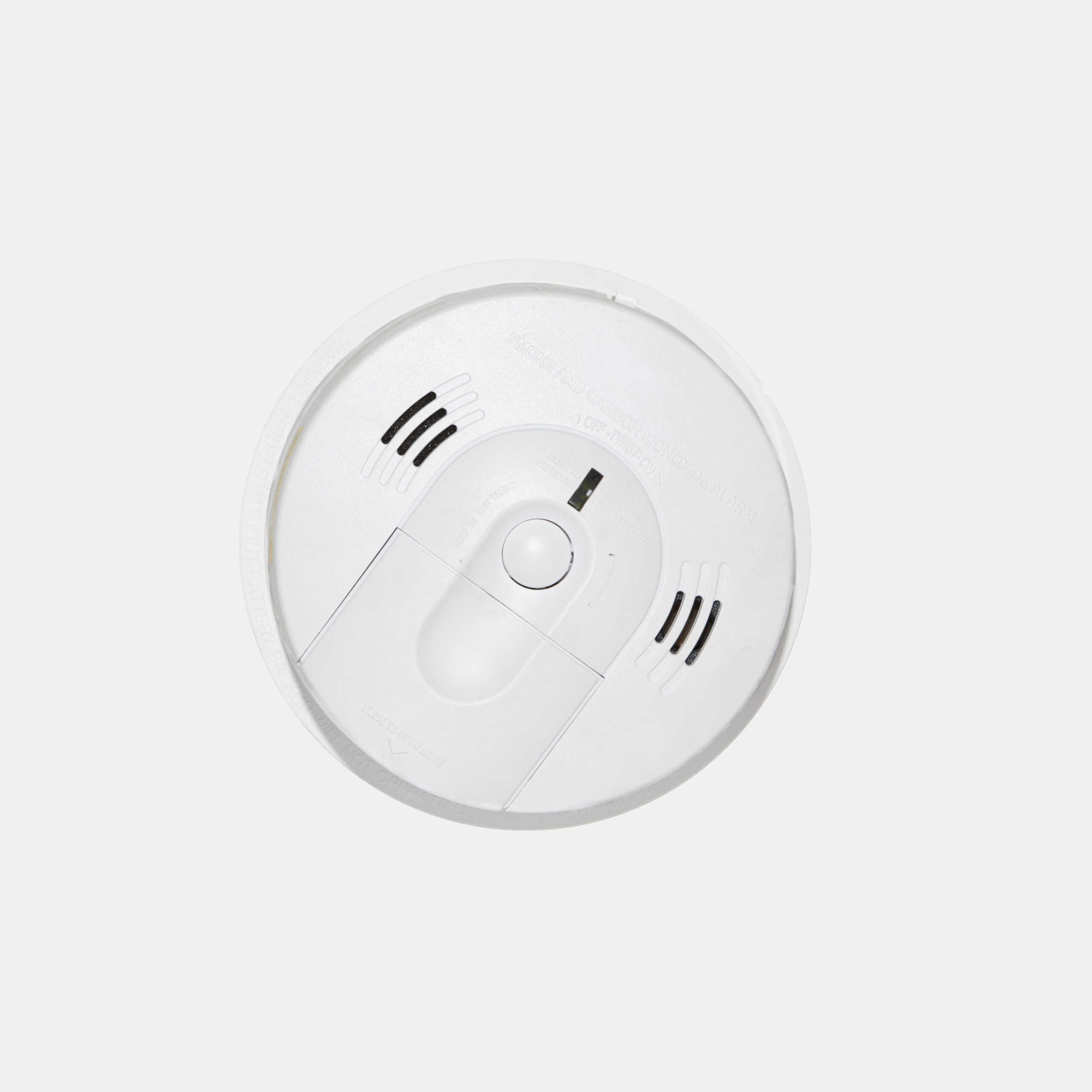
smoke carbon monoxide alarm isolated white background scaled